
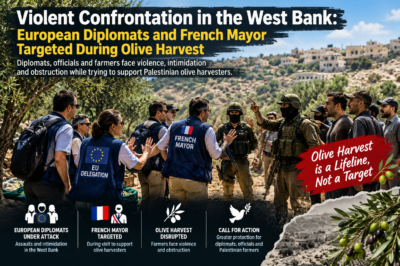
The occupied West Bank is witnessing renewed tensions as violence against Palestinian farmers during the annual olive harvest raises serious concerns about human rights, regional stability and international law. The olive harvest, traditionally conducted during October and November, holds immense cultural, social and economic significance for Palestinian communities. However, increasing reports of harassment, restricted access to agricultural land and attacks on farmers have made this important seasonal activity increasingly difficult.
Olive cultivation represents more than an agricultural occupation for Palestinians; it is closely associated with their cultural identity, ancestral heritage and connection to their land. Thousands of families depend on the production and sale of olives and olive oil for their livelihoods. Consequently, damage to olive trees, destruction of crops and restrictions on access to groves can cause substantial financial losses and deepen the economic difficulties of already vulnerable communities.
Recent reports of an alleged assault by Israeli settlers on a group of European diplomats and local officials accompanying Palestinian farmers have further intensified international concern. The delegation reportedly included Patrice Leclerc, mayor of the French municipality of Gennevilliers. The incident has drawn attention to the risks faced not only by Palestinian residents but also by international representatives seeking to monitor conditions and discourage violence.
The reported confrontation highlights the increasingly volatile situation in the West Bank, where tensions have escalated amid the wider regional conflict. Humanitarian organisations have repeatedly expressed concern over settler-related violence, property destruction, displacement and inadequate protection for affected communities. Such incidents undermine public confidence in the rule of law and raise questions about the effectiveness of measures taken to prevent further attacks.
The international response has included calls for Israeli authorities to ensure the safety of Palestinian farmers, investigate allegations of violence and bring those responsible to justice. European governments and international organisations have emphasised the importance of accountability, respect for human rights and compliance with international legal obligations. The conduct of security forces and the effectiveness of investigations into alleged abuses remain significant issues in the debate.
The continuing violence also threatens prospects for peaceful coexistence. Attacks on agricultural livelihoods and the destruction of culturally significant resources can intensify resentment, deepen divisions and make future reconciliation more difficult. At the same time, growing diplomatic concerns risk placing additional strain on Israel’s relations with its international partners.
Addressing this situation requires effective protection for civilians, unrestricted lawful access to agricultural land, impartial investigations and consistent enforcement of the law. International diplomatic engagement must also support efforts to reduce tensions and protect vulnerable communities.
Ultimately, safeguarding Palestinian farmers during the olive harvest is both a humanitarian necessity and an important step towards regional stability. Ending violence, ensuring accountability and respecting the rights and dignity of all communities are essential to rebuilding trust and creating conditions conducive to a just and lasting peace in the West Bank.






Leave a Reply