
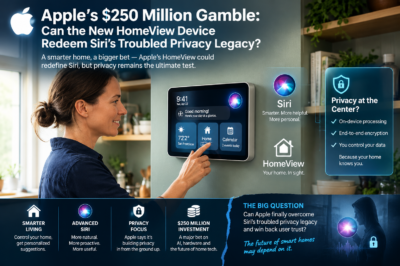
Apple Inc. is reportedly preparing to expand its presence in the smart home market with a new wall-mounted display, tentatively known as “HomeView.” Designed to function as a central control system for household devices, the product could strengthen Apple’s connected ecosystem. However, its reported reliance on Siri, the company’s voice assistant, has raised concerns about privacy, reliability and consumer confidence following earlier legal controversies.
Apple has long positioned privacy protection as a key feature of its products and a major distinction from competing technology companies. Nevertheless, allegations that Siri-enabled devices recorded private conversations without users’ consent damaged this reputation and resulted in substantial legal scrutiny. Reports of a $250 million class-action settlement have renewed questions about whether Apple’s voice-assistant technology can meet the privacy expectations associated with a device intended for everyday use inside homes.
The proposed HomeView device is expected to compete with Amazon’s Echo Show and Google’s Nest Hub. By integrating smart displays, voice commands and artificial intelligence, Apple aims to provide users with a convenient platform for managing lighting, security cameras, smart locks, thermostats and other connected appliances. Integration with Apple’s wider ecosystem could also encourage greater use of services such as Apple Music, Apple TV+ and iCloud.
Artificial intelligence is likely to be central to the product’s appeal. Apple’s broader Apple Intelligence initiative aims to deliver more personalised and context-aware assistance, potentially enabling users to manage household activities through natural conversations and automated suggestions. On-device processing and privacy-focused cloud technologies could help limit the exposure of sensitive information. However, questions remain about how effectively the system will distinguish genuine commands from background conversations in a busy household.
Competition in the smart home sector is already intense. Amazon benefits from its established Alexa ecosystem, while Google draws on its search capabilities and connected services. Apple may adopt a premium pricing strategy, making seamless integration, dependable performance and demonstrable privacy protection essential to attracting consumers.
For investors, the device could represent an opportunity to expand Apple’s hardware portfolio, strengthen customer loyalty and generate additional services revenue. Conversely, disappointing sales, technical shortcomings or renewed privacy controversies could damage the company’s reputation and create further regulatory and financial challenges.
Ultimately, HomeView’s potential success will depend on more than sophisticated design and artificial intelligence. Apple must demonstrate that its privacy safeguards are effective, transparent and trustworthy. If the company successfully combines convenience with robust data protection, it could establish a stronger position in the smart home market. If not, unresolved concerns surrounding Siri could undermine consumer confidence and weaken its ambitions in the rapidly evolving AI-driven technology landscape.







Leave a Reply