
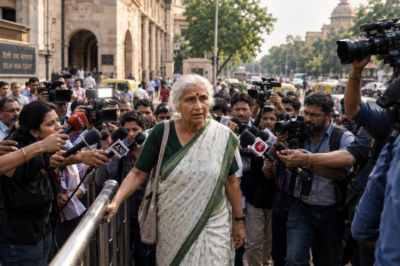
A long-running legal dispute between prominent social activist Medha Patkar and Delhi Lieutenant Governor V. K. Saxena reached a significant stage in May 2024 when a Delhi court convicted Patkar in a criminal defamation case. The judgment attracted considerable attention, raising important questions about freedom of expression, personal reputation and accountability in public discourse.
The controversy originated during the early 2000s, when Patkar was actively leading the Narmada Bachao Andolan, a movement opposing displacement associated with the Sardar Sarovar Dam project. Saxena, who headed the National Council for Civil Liberties at the time, supported the dam’s construction, leading to differences between the two over development and rehabilitation issues.
The legal proceedings began after Saxena objected to statements made by Patkar in a press communication, alleging that they damaged his personal and professional reputation. The dispute subsequently continued through the judicial system for more than two decades.
In its 2024 ruling, the court held Patkar guilty of criminal defamation under Sections 499 and 500 of the Indian Penal Code. The decision emphasised that freedom of expression carries responsibilities and that allegations affecting an individual’s reputation must be supported by appropriate evidence.
The case also generated wider discussion about the relationship between social activism and legal accountability. Supporters of Patkar viewed the proceedings through the broader concerns of protecting dissent and allowing activists to question influential individuals and institutions without intimidation.
Conversely, those supporting the complainant’s position maintained that public criticism should not extend to unsubstantiated personal allegations, irrespective of the social or political standing of the individuals involved.
The judgment brought renewed attention to India’s criminal defamation provisions and the continuing debate over whether reputational disputes should attract criminal penalties or primarily be addressed through civil remedies.
The prolonged proceedings also highlighted the challenges associated with lengthy litigation, particularly when disputes involve individuals engaged in public life and social movements.
Patkar’s legal right to challenge the conviction through appellate proceedings remains an important aspect of the judicial process. Any subsequent decision by a higher court would be relevant to understanding the case’s ultimate legal outcome.
The Medha Patkar–V. K. Saxena dispute reflects a larger democratic challenge: maintaining a fair balance between the right to express criticism and the right to protect personal dignity.
Ultimately, the case underlines the importance of responsible public communication, evidence-based allegations, judicial fairness and safeguarding legitimate democratic dissent. A healthy democracy requires both the freedom to question authority and protection against reputational harm caused by legally defamatory statements.







Leave a Reply