
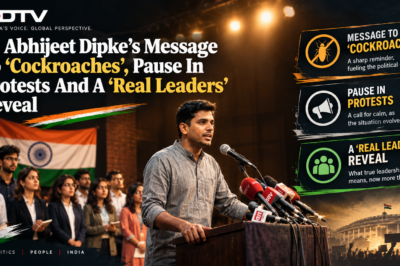
The recent developments surrounding Abhijeet Dipke, as described in the source material and reported by NDTV, highlight an important moment in India’s evolving landscape of public protest and youth participation. His announcement of a temporary suspension of active demonstrations, accompanied by strong remarks directed at individuals he describes as “cockroaches,” has generated considerable discussion. Rather than necessarily indicating the end of the campaign, the pause may represent an attempt to reorganise the movement, strengthen its internal structure and prepare for its next course of action.
Controversial Language and Internal Unity
Dipke’s use of the term “cockroaches” has become a prominent feature of the controversy. The expression reflects his apparent frustration with individuals whom he considers responsible for creating divisions or undermining the movement. While such language may energise committed supporters, it can also intensify disagreements and alienate people who favour a more constructive approach. The challenge for the movement will be to maintain solidarity while ensuring that criticism and differences of opinion are addressed responsibly.
A Pause as a Strategic Decision
Suspending street demonstrations does not automatically signify defeat. Large-scale protests require sustained resources, coordination and public engagement. A temporary break can provide an opportunity to review objectives, strengthen organisation and develop more clearly defined demands. The movement may also use this period to consider policy proposals, legal avenues and further engagement with the authorities.
A shift from visible demonstrations towards planning and dialogue could help transform public mobilisation into a more structured campaign. However, the effectiveness of this approach will depend on whether the pause produces practical outcomes and maintains the confidence of supporters.
Leadership, Transparency and Accountability
The identification of individuals described as the movement’s “real leaders” represents another significant aspect of the developments outlined in the source. Greater visibility of leadership may help establish clearer responsibilities and improve public understanding of the campaign’s objectives. At the same time, publicly recognised leaders face increased scrutiny and must demonstrate credibility, transparency and commitment to their stated goals.
Media Influence and Public Perception
NDTV’s coverage has helped bring the issue to the attention of a wider audience beyond social media. The interaction between digital platforms and mainstream news outlets illustrates how online campaigns can influence public discussion and attract political attention. Nevertheless, extensive media exposure also increases the importance of factual accuracy, consistency and responsible communication.
Social and Political Implications
The movement reflects the growing willingness of young citizens to participate actively in public affairs rather than limiting their engagement to electoral processes. Organised activism can encourage civic responsibility and bring neglected concerns into public debate. However, confrontational rhetoric may deepen social divisions if it overshadows constructive dialogue.
Conclusion
Abhijeet Dipke’s announced pause, the emphasis on identifying leadership and the controversy surrounding his language may signal a transition in the movement’s approach. Its future success will depend on maintaining unity, presenting clear demands and translating public mobilisation into meaningful results. Ultimately, sustained democratic engagement requires not only determination and organisation but also accountability, inclusiveness and constructive dialogue.





Leave a Reply