
Assam has a rich and distinctive tradition of sericulture, with silk production deeply rooted in its cultural heritage and rural way of life. For generations, Assamese communities and indigenous people have reared silkworms, traditionally produced silk and transformed it into beautiful handcrafted products featuring unique designs, patterns and exceptional craftsmanship. These products are not merely articles of daily use but also represent the region’s cultural identity, traditional knowledge and artistic excellence.
One of the most cherished traditions is the presentation of a traditionally woven silk shawl to a daughter at the time of her marriage. Such shawls are valued for their durability, softness and cultural significance, with some traditionally made pieces treasured by families for decades. Their distinctive texture and enduring quality have earned admiration, with comparisons sometimes drawn with the renowned Pashmina shawls of Jammu and Kashmir.
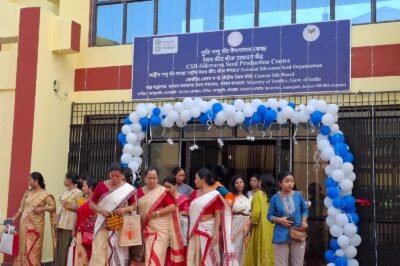
The Central Silk Board (CSB), Ministry of Textiles, Government of India, marked a significant milestone in strengthening India’s sericulture sector with the inauguration of state-of-the-art infrastructure at the Silkworm Seed Production Centre (SSPC), Jorhat, Assam, on 8 October 2026, followed by a Seri-Stakeholder Meet.
The programme was organised by the National Silkworm Seed Organization (NSSO), reflecting the Government of India’s continued commitment to strengthening silkworm seed production, modernising sericulture infrastructure and supporting the sustainable development of the silk industry.
The occasion was graced by Shri Pabitra Margherita, Hon’ble Minister of State for External Affairs and Textiles, Government of India, as the Chief Guest. Shri Kamakhya Prasad Tasa, Hon’ble Member of Parliament, Lok Sabha, Kaziranga Constituency, and Shri Hitendra Nath Goswami, Hon’ble Member of the Legislative Assembly, Jorhat Constituency, attended the programme. Shri P. Sivakumar, IFS, Member Secretary, Central Silk Board, was also present.
The inauguration represents an important step towards enhancing infrastructure and strengthening institutional support for quality silkworm seed production. The accompanying Seri-Stakeholder Meet provided an important platform for interaction among stakeholders and for advancing collective efforts towards the growth of the sericulture sector.
The initiative underscores the importance of modern infrastructure, quality seed production and stakeholder collaboration in strengthening the silk value chain, improving productivity and supporting the livelihoods of sericulture farmers and associated communities. It reaffirms the Central Silk Board’s role in promoting a robust, sustainable and competitive Indian silk industry.
This initiative has the potential to strengthen rural livelihoods, empower traditional artisans and promote Assam’s distinctive silk products in wider national and international markets, contributing to a more sustainable and vibrant sericulture economy.






Leave a Reply