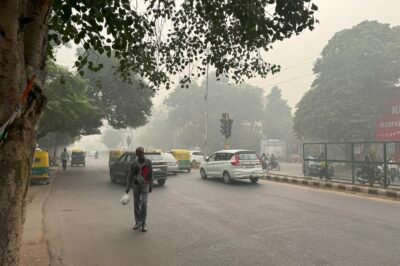
Delhi’s persistent air pollution crisis has prompted the Supreme Court to take urgent measures, ordering the closure of schools in the National Capital Region (NCR) and enforcing strict curbs under Graded Response Action Plan (GRAP) Stage 4. This decision follows sharp criticism of the Commission for Air Quality Management (CAQM) for delays in implementing earlier restrictions under GRAP 3 and 4.
Escalating Air Pollution Levels
The capital’s air quality has steadily deteriorated, with AQI levels breaching “severe” categories. Smog, primarily caused by vehicle emissions, stubble burning in neighboring states, and industrial activity, has enveloped Delhi and NCR, severely affecting visibility and public health. With fine particulate matter (PM2.5) at alarming levels, residents face increased risks of respiratory and cardiovascular issues.
The Supreme Court, expressing concern over the health of children and the broader population, directed immediate action to address the crisis.
GRAP 4 Restrictions: What They Entail
Under GRAP Stage 4, the most stringent set of anti-pollution measures, the following restrictions have been imposed:
- School Closures: All schools in the NCR have been directed to shut down temporarily, with primary classes shifting to online modes to minimize children’s exposure to toxic air.
- Halted Construction: Construction and demolition activities, except for essential projects like national security and public utility works, have been banned.
- Industrial Shutdowns: Polluting industries have been ordered to cease operations, prioritizing a reduction in emissions from factories.
- Transport Curbs: Only electric, CNG vehicles, and those involved in essential services are permitted on roads; restrictions on diesel vehicles are tightened.
These measures aim to bring immediate relief while authorities work toward medium- and long-term solutions.
Supreme Court’s Intervention and Accountability
The Supreme Court has been critical of the CAQM for not acting swiftly as pollution levels worsened. By delaying the implementation of GRAP 3 and 4 restrictions, the commission failed to mitigate the situation before it reached emergency levels. The court emphasized the urgency of preventive actions to avoid recurring pollution crises, especially during winter months when weather conditions exacerbate smog formation.
The Impact on Residents and Public Health
Delhi residents are grappling with severe health challenges as pollution reaches hazardous levels. Hospitals have reported an increase in cases of asthma, bronchitis, and other respiratory conditions, particularly among children and the elderly. Experts warn of long-term consequences if the pollution levels persist, affecting overall life expectancy and quality of life.
The restrictions under GRAP 4, though necessary, bring significant disruptions to daily life. Industries and workers reliant on construction projects face economic strain, while families adjust to school closures and restricted mobility. However, public sentiment largely supports these measures as essential for protecting health and addressing environmental concerns.
Long-Term Solutions Needed
While GRAP offers a structured response to pollution spikes, the crisis underscores the need for sustainable, long-term strategies to combat air pollution. Experts advocate for:
- Stubble Burning Alternatives: Encouraging farmers to adopt eco-friendly practices with government support.
- Public Transport Expansion: Investing in robust public transport systems to reduce reliance on private vehicles.
- Renewable Energy Transition: Shifting industries and power generation from fossil fuels to cleaner energy sources.
Conclusion: A Wake-Up Call for Environmental Policy
The Supreme Court’s intervention reflects the urgency of addressing Delhi’s air pollution crisis. While immediate measures under GRAP 4 aim to reduce the health impact, this recurring issue demands a unified and sustained effort. With collaborative action from governments, industries, and citizens, Delhi can work toward a cleaner, healthier future.





Leave a Reply