Washington is facing a serious test of its military intelligence apparatus following the reported disclosure of sensitive information concerning U.S. and Israeli military planning related to Iran. The episode has raised questions not only about the security of classified information but also about the trust, discipline and internal safeguards of the American defence establishment.
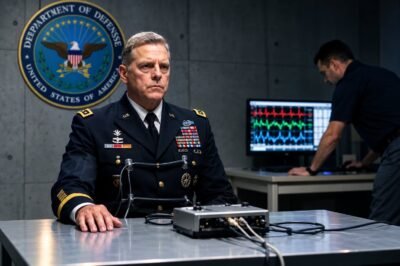
In an extraordinary response, senior Army personnel have reportedly faced extensive scrutiny, including polygraph examinations, as investigators attempt to determine how highly classified material reached the public domain. The development reflects the growing anxiety within the Pentagon over the threat posed by insiders in an era when sensitive information can be copied and distributed almost instantly.
A Leak With Strategic Consequences
The reported material is understood to have contained sensitive assessments relating to Israeli preparations for possible military action against Iran and the broader U.S. intelligence and logistical posture in the region. If authentic and sufficiently detailed, such information could provide an adversary with valuable insight into military planning, surveillance capabilities and potential responses.
The danger extends beyond immediate operational security. Intelligence cooperation depends fundamentally on confidence between allies. When sensitive information is exposed, partner governments may become more reluctant to share intelligence or may reconsider how much information they provide to Washington.
For Israel, whose security relationship with the United States is deeply dependent on intelligence cooperation, the implications are particularly serious. For Iran, meanwhile, the disclosure could offer both operational clues and a powerful propaganda opportunity.
The Pentagon’s Unusual Response
The reported use of polygraph examinations highlights the intensity of the investigation. Polygraphs measure physiological responses such as breathing, heart rate and skin conductivity during questioning. They are controversial because changes in these responses do not necessarily establish that someone is lying.
Within the military, however, polygraph examinations can serve investigative and deterrent purposes. Their use in a major leak inquiry signals that investigators are examining not only technological vulnerabilities but also the possibility that someone with legitimate access deliberately or accidentally disclosed classified information.
Yet an aggressive internal investigation carries its own risks. Excessive suspicion can undermine morale and make officials reluctant to communicate openly. Military organisations depend upon rapid information sharing and professional disagreement; a climate in which officers fear becoming suspects could weaken precisely those qualities.
The Digital-Age Insider Threat
The incident demonstrates how dramatically the nature of intelligence security has changed. During earlier periods, stealing classified material generally required physical access, careful planning and often a network of intermediaries. Today, a single individual with authorised digital access can potentially copy large quantities of information and distribute it worldwide within minutes.
The experiences of the Edward Snowden disclosures and the Discord intelligence leak involving Jack Teixeira demonstrated the extraordinary reach of digital-era security breaches. The central challenge for governments is therefore no longer simply keeping outsiders away from classified information. It is determining how to manage the risks created by people who already possess legitimate access.
Washington and Jerusalem Face Difficult Questions
The episode could also test the resilience of the U.S.-Israel intelligence relationship. Intelligence partnerships depend on an assumption that highly sensitive information will be protected after it is shared.
Any perception that American systems cannot adequately safeguard Israeli operational information could encourage tighter restrictions on intelligence sharing. Such changes could affect the speed and quality of cooperation at a time when the Middle East remains strategically volatile.
The political consequences could be equally significant. If investigators establish that the disclosure was deliberate and politically motivated, the case could expose divisions within the American security establishment over U.S. policy toward Iran and the wider Middle East.
The Human Cost of the Investigation
Behind the institutional crisis are senior military officers whose careers can be profoundly affected by the investigation. Being subjected to suspicion or questioning can damage professional relationships even when no wrongdoing is ultimately established.
There is also a broader organisational concern. If officials begin to regard every conversation, email or document access as a potential source of investigation, communication may become unnecessarily restrictive. The Pentagon must therefore find the difficult balance between protecting secrets and preserving an environment in which military professionals can exchange information responsibly.
Rethinking Classified Information
The long-term response is likely to extend beyond identifying an individual responsible for the leak. The Pentagon may be forced to reconsider how classified material is accessed, tracked and distributed.
Modern security systems increasingly rely on principles such as least-privilege access, continuous authentication, digital auditing and behavioural monitoring. Artificial intelligence could eventually play a larger role in identifying unusual patterns of document access or data movement.
But technology alone cannot solve the insider-threat problem. Strong security also requires clear accountability, effective personnel screening, disciplined information-sharing practices and a culture in which employees understand the consequences of mishandling sensitive material.
A Warning for the Future
The reported Iran-related intelligence breach is a reminder that national security in the digital age can be compromised without a traditional espionage network or sophisticated foreign operation. Sometimes the greatest vulnerability exists within the system itself.
For the Pentagon, the immediate priority is to establish what was disclosed, how it happened and whether further information remains at risk. The larger challenge is restoring confidence among military personnel and international partners while ensuring that future security measures do not destroy institutional trust.
Ultimately, the success of the investigation will not be measured solely by whether a suspect is identified. It will also depend on whether Washington can strengthen its information-security architecture without creating an atmosphere of permanent suspicion.
In the modern intelligence environment, secrecy is no longer protected simply by locked rooms and security clearances. It depends on resilient technology, disciplined institutions and, above all, responsible human behaviour. The Pentagon’s response to this crisis could therefore shape how the world’s most powerful military protects its secrets in the years ahead.







Leave a Reply