
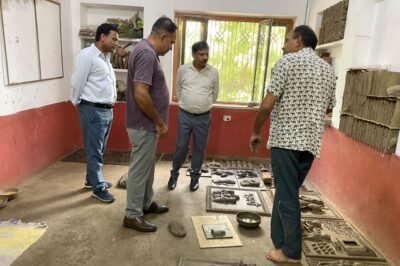
Molela village in Rajasthan stands as a remarkable example of how traditional artisan skills, locally available resources and community enterprise can come together to create sustainable livelihoods while preserving a living cultural heritage. For generations, around 200 terracotta and blue-pottery artisans have practised their craft, transforming local materials into distinctive handcrafted products through skill, creativity and dedication.
The village has produced several accomplished craftspersons who have brought recognition to Molela at the national and State levels. Shri Rajindar Kumar and Shri Dinesh Kumar have been honoured with the National Award, while Shri Laxmi Lal Kumar, Shri Bagga Lal and others have received National Merit Certificates and State-level recognition. Their achievements demonstrate how generations-old traditional knowledge, when combined with imagination and perseverance, can attain wider recognition.
Every product created by the artisans carries a story. From decorative pieces to functional articles, their creations represent much more than technical craftsmanship. They embody the creativity, emotions, cultural identity and inherited knowledge of the artisan. The satisfaction on an artisan’s face after securing business for a handcrafted product reflects not merely an individual success, but the progress and confidence of the entire community.
When artisans prosper, crafts flourish; when crafts flourish, culture shines; and when culture shines, the nation shines.
Introducing younger generations to such craft clusters is equally important. Many people use traditional pottery and handcrafted products in their daily lives and during social and cultural occasions without knowing the painstaking processes behind their creation. Visits to craft clusters can help young people understand the skill, labour and patience involved, while creating greater appreciation for the artisans who sustain these traditions.
During a recent visit to the cluster, senior officers from the Office of the Development Commissioner (Handicrafts), including Shri Virendra Kumar, Regional Director (Handicrafts), Shri Rajat Verma, Shri Rabiveer Choudhuri, Shri Mahindar Singh Meena and Shri Surjya Deori, observed the activities of the artisans and assessed the ways in which handicrafts are supporting their livelihoods.
Molela’s artisans have developed markets both locally and beyond Rajasthan, including linkages with bulk buyers in Ahmedabad and Madhya Pradesh. An important intervention of the Development Commissioner (Handicrafts) has been the formation of M/s Molela Terracotta Handicrafts Producer Company Ltd., providing cluster artisans with a common platform and encouraging a more organised and sustainable business model. Need-based interventions have also been undertaken to strengthen the cluster.
Another promising development is the initiative of the State Government to establish a Common Facility Centre (CFC). With the installation of modern machinery and facilities, the CFC is expected to assist artisans in improving finishing, reducing labour and production time, and developing products suitable for wider markets, including potential export opportunities, at competitive costs.
The aspirations of Molela’s artisans are clear: better technology, stronger markets, improved productivity, higher incomes and a secure future for their traditional craft. Molela demonstrates that when traditional knowledge, local resources, institutional support and market opportunities converge, a village craft tradition can become a powerful engine of livelihood, dignity and cultural preservation.
Molela is not merely preserving a craft—it is keeping a heritage alive through the hands, hearts and imagination of its artisans.






Leave a Reply