
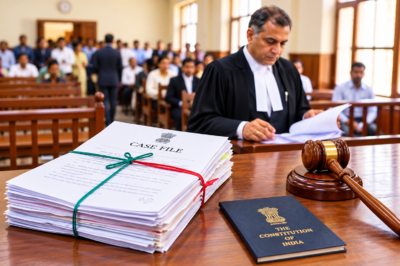
The reported case involving Saurav Das has brought renewed attention to the legal and constitutional implications of Look Out Circulars (LOCs), passport verification and citizenship-related disputes in India. The matter highlights the delicate balance between the State’s responsibility to safeguard national interests and an individual’s fundamental rights, particularly the freedom of movement and the right to personal liberty.
A Look Out Circular is an administrative mechanism used by authorities to monitor the movement of individuals who may be required in connection with an investigation or legal proceedings. Once issued, an LOC can restrict international travel and create significant difficulties for the individual concerned. However, such restrictions must be supported by valid reasons and remain subject to judicial scrutiny.
In the case of Saurav Das, reported discrepancies in passport-related documents have reportedly prompted questions concerning the authenticity and consistency of his identification records and their possible bearing on citizenship. The matter brings into focus the importance of accurate documentation, proper verification procedures and compliance with the Passports Act, 1967, and the Citizenship Act, 1955.
At the same time, the judiciary plays a crucial role in ensuring that administrative measures are not arbitrary or disproportionate. The right to travel abroad, recognised as part of personal liberty under Article 21 of the Constitution, must be protected through fair procedures and reasoned decisions.
The case also highlights the importance of maintaining consistency across essential identity documents and strengthening verification mechanisms to prevent avoidable legal complications.
Ultimately, the matter raises a significant question: how can national security and the integrity of citizenship records be protected without compromising individual rights and procedural fairness? Its outcome may offer important lessons for passport authorities, investigative agencies and citizens alike.






Leave a Reply