
Connecting Traditional Craftsmanship with Institutional Strength, Digital Innovation and Sustainable Market Opportunities
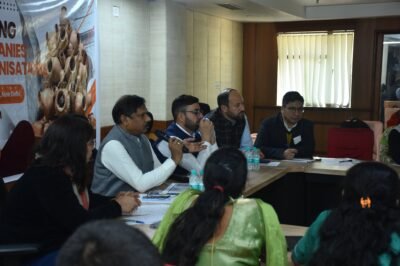
The Northern Regional Office (NRO), Office of the Development Commissioner (Handicrafts), Ministry of Textiles, Government of India, organised a one-day seminar on “Capacity Building for Producer Companies (PCs) and NGOs” on 26th November 2026 at Rajiv Gandhi Handicrafts Bhawan, New Delhi. The seminar brought together representatives of Handicraft Producer Companies, empanelled NGOs, artisan-shareholders, master trainers, marketing professionals, academic institutions and departmental officers on a common platform to deliberate on strengthening grassroots institutions, improving programme implementation, expanding market opportunities and creating sustainable livelihood prospects for artisans.
The programme commenced with a welcome address by Ms. Astha Agarwal, Assistant Director (Handicrafts), NRO, followed by introductory remarks by Shri Virendra Kumar, Regional Director (Handicrafts). He encouraged the participating organisations to introduce their activities, share their areas of expertise and highlight the traditional crafts and artisan communities associated with their respective organisations. The interaction provided valuable insights into the diversity of India’s handicraft traditions and the institutional challenges faced by organisations working at the grassroots level.
Strengthening Institutional Capacity and Ensuring Effective Implementation of Government Initiatives
A significant part of the seminar focused on sensitising Producer Companies and NGOs about the operational and procedural requirements of various departmental initiatives. Shri Virendra Kumar briefed the participants on the National Handicrafts and Handloom Project (NHHP) and its revised guidelines, covering eligibility criteria, proposal submission, responsibilities of implementing agencies and conditions governing the sanction and execution of approved activities.
The participants were also sensitised about artisan registration and onboarding on the IndiaHandmade portal, including the requisite documentation. The Guwahati pilot Design and Development Workshop (DDW) model was presented as a practical example, explaining its planning, implementation, documentation and potential lessons for replication in other regions.
Particular emphasis was placed on financial and administrative discipline, including preparation and submission of bills, scrutiny of claims, maintenance of attendance records, invoices, vouchers, activity reports, statements of expenditure and Utilisation Certificates (UCs), wherever applicable. The discussion also addressed common documentation deficiencies, delayed reimbursement claims, pending UCs and the importance of completing the physical and financial closure of sanctioned programmes within the prescribed timelines.
Appealing to all participating Producer Companies and NGOs to come forward and actively support the implementation of departmental activities, the Regional Director emphasised that Government assistance must translate into tangible benefits for genuine artisans. He urged the organisations to strictly follow official guidelines, ensure transparency and proper utilisation of public funds, maintain accurate records and settle UCs and other financial compliances in a timely manner. He further encouraged them to demonstrate commitment, accountability and professionalism so that their initiatives could emerge as successful and replicable models of artisan development.
National Handloom and Handicraft Programme: A Vision for Transforming India’s Creative Economy
A major highlight of the seminar was the presentation by Shri Virendra Kumar on “National Handloom & Handicraft Programme (NHHP): Union Budget 2026–27 Announcement – Transforming India’s Creative Economy (FY 2026–27 to FY 2030–31).” The presentation outlined the proposed vision and strategic direction for strengthening the handloom and handicrafts sectors through an integrated development approach, with the approval of the proposed programme still under consideration.
Emphasising the principle of reaching the unreached, he urged Producer Companies and NGOs to identify traditional crafts, sub-categories and geographical areas that remain outside the ambit of existing developmental interventions. Particular attention was drawn to Aspirational Districts identified by NITI Aayog and the Ministry of Textiles, where focused interventions could create meaningful livelihood opportunities for artisan communities.
The proposed framework highlighted entrepreneurship development, research and development, skill enhancement, design innovation, craft documentation, market access, branding, social protection and inclusion as important pillars of sectoral growth. The presentation also discussed the importance of convergence between the handloom and handicrafts sectors, strengthening existing schemes and avoiding duplication of interventions. The broader vision was linked to the national aspirations of Viksit Bharat 2047 and Atmanirbhar Bharat.
The proposed cluster prioritisation framework was also discussed, assigning weightage to market and export potential (25%), heritage and craft significance (20%), livelihood impact (25%), social inclusion (20%) and regional priority (10%). Emerging opportunities arising from international trade agreements and changing market conditions, particularly in European markets, were also highlighted, underscoring the need to prepare Indian handicraft enterprises for wider market access.
The Regional Director further drew attention to the financial assistance of ₹8,000 per month available to eligible master craftspersons and awardee artisans above 60 years of age, encouraging the organisations to identify and guide eligible beneficiaries to approach the Department.
Craft Curation and Exhibition Design: Connecting Heritage with Contemporary Audiences
An engaging technical session was delivered by Ms. Nidhi, Deputy Director (Design & Documentation), National Crafts Museum & Hastkala Academy, on “Exhibition Design and Curatorial Perspective.” Her presentation explored how thoughtfully curated exhibitions can communicate the cultural, historical and artistic significance of Indian handicrafts to contemporary audiences.
She explained that an effective exhibition should go beyond the conventional arrangement and display of products. It should develop a central theme, meaningful narrative and visual identity that enable visitors to understand the history, traditions, techniques and human stories associated with each craft. The role of a curator in developing exhibition concepts, selecting signature products, preparing captions and creating an engaging visitor experience was highlighted.
The session also covered visual merchandising, product categorisation, appropriate lighting, colour harmony, stall planning and audience interaction. Referring to the exhibition concept “Reetiyo se Kalakritiyon ka Safar”, she emphasised storytelling, thoughtful presentation and live craft demonstrations as effective ways of building an emotional connection between artisans, their heritage and visitors. She encouraged Producer Companies and NGOs to adopt design innovation and contemporary product development without compromising the authenticity and traditional identity of their crafts.
Universities and Institutional Partnerships in Craft Development
The seminar also explored the potential contribution of academic institutions to craft documentation, skill development and community-based interventions. Ms. Manjali of Poornima University, Jaipur, shared perspectives on the role of universities through the adoption of surrounding villages, capacity-building initiatives, social work, exhibitions and systematic documentation of traditional crafts. The discussion highlighted the importance of collaboration between educational institutions, artisan communities and implementing agencies in strengthening the knowledge base and visibility of India’s craft traditions.
From NHDP to NHHP: Strengthening Institutional Performance and Market Linkages
Shri Rizvi, Assistant Director (Handicrafts), Rewari, presented an overview of the transition and proposed development approach from the National Handicrafts Development Programme (NHDP) towards the National Handloom and Handicraft Programme (NHHP). He highlighted the importance of strengthening Producer Companies, improving cluster-level production, promoting skill development and establishing stronger buyer–artisan linkages.
Drawing attention to practical implementation gaps, he stressed the need for timely filing of reimbursement claims, proper follow-up of UCs and completion of statutory and organisational compliances. He advised Producer Companies to understand consumer preferences and prevailing market demand before developing products and designs. Referring to the willow wicker craft design development workshop, he illustrated the potential of design intervention in improving product appeal and market competitiveness. Opportunities through Marketing Support Services and Gandhi Shilp Bazaars were also discussed as important avenues for expanding market access.
Unmukt Women Producer Company: A Model of Grassroots Leadership and Community Ownership
An especially insightful interaction was shared by Shri Jitendra Pratap Singh of Unmukt Women Producer Company, Jaipur. Drawing from the organisation’s experience, he explained how sustained community mobilisation and the development of small Self-Help Groups (SHGs) gradually evolved into a structured Producer Company.
He emphasised that sustainable institutional development begins with building trust, nurturing local leadership and encouraging community ownership rather than merely establishing an organisation on paper. Women-led leadership, capacity building, B2B buyer linkages and consistent product availability were identified as essential factors for building a credible and commercially sustainable enterprise.
He also shared practical approaches to coordinating artisans and monitoring product availability through WhatsApp-based communication. The innovative use of waste materials and discarded fabrics for developing value-added products demonstrated the potential of resourcefulness and sustainable production. He further highlighted the possibilities of AI-enabled design interventions in attracting younger generations towards craft-based entrepreneurship.
IndiaHandmade: Taking Traditional Crafts to the Digital Marketplace
A dedicated presentation by Ms. Anamika provided an overview of the IndiaHandmade portal, launched in April 2023 by the Union Minister for Textiles. The session explained how the Government-supported digital platform seeks to provide artisans and Producer Companies with direct access to online markets and a wider consumer base.
The presentation covered seller registration, documentation requirements, product listing, inventory management and order processing. The portal’s features, including zero commission, Government-supported logistics, promotional opportunities, dedicated buyer and seller applications, virtual training, WhatsApp-based assistance, IVRS support and seller performance dashboards, were explained.
Participants were sensitised to the importance of timely order processing, minimising cancellations, maintaining product quality, updating inventory and responding promptly to customer requirements. They were encouraged to utilise the support of Handicrafts Service Centres (HSCs) for onboarding and resolving registration-related issues. The session reinforced the need for artisan institutions to embrace digital platforms and develop the confidence and capabilities required to participate in the expanding e-commerce ecosystem.
Marketing Strategies and Market Linkages: Transforming Craftsmanship into Sustainable Enterprises
The session on “Marketing Strategies and Market Linkages for Producer Companies in the Handicraft Sector”, conducted by Ms. Shalini Srivastava, Member of Faculty (Marketing), focused on developing commercially sustainable artisan enterprises. She discussed brand development, product positioning, digital promotion, search optimisation, packaging, consumer behaviour and market segmentation.
The presentation highlighted opportunities available through platforms and initiatives such as GeM AABHAR Collection, Amazon Karigar, Amazon Saheli and Amazon Global. It also examined challenges faced by Producer Companies, including competition from mass-produced replicas, weak branding, inconsistent product supply, limited digital marketing capabilities and changing consumer preferences.
Participants were encouraged to focus on quality assurance, appropriate pricing, attractive packaging, timely delivery and responsive customer service to build consumer confidence and establish long-term buyer relationships. The session reinforced the importance of understanding market demand and developing products that combine traditional craftsmanship with contemporary consumer expectations.
A Collective Commitment Towards Artisan Empowerment
The seminar also provided an interactive platform for master trainers and participants associated with pine needle craft, appliqué work and stitching to share their experiences, practical inputs and training requirements. The discussions reflected the diversity of India’s handicraft traditions and the need for continuous capacity building, design support, improved production systems and stronger market access.
The deliberations throughout the day reinforced a common understanding that the sustainable growth of the handicrafts sector requires much more than financial assistance alone. Strong grassroots institutions, capable community leadership, professional design intervention, reliable production systems, digital literacy, market intelligence, effective financial management and strict adherence to programme guidelines are equally essential.
The seminar concluded with feedback and interaction among participants, reaffirming the commitment to strengthen Producer Companies and NGOs as effective partners in artisan empowerment. It served as a meaningful platform for knowledge exchange, institutional networking and practical learning, while encouraging artisan organisations to embrace innovation, technology, accountability and emerging domestic and international market opportunities.
The larger message of the seminar was unmistakable: empowering artisans requires empowering the institutions that represent them. By building accountable organisations, promoting innovation, strengthening market linkages and ensuring the effective utilisation of Government support, India’s rich traditional craftsmanship can be transformed into a dynamic, competitive and sustainable economic force—creating better opportunities, stronger livelihoods and a brighter future for artisan communities.





Leave a Reply