
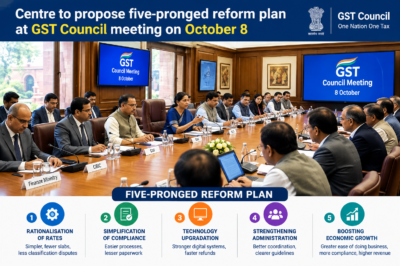
The forthcoming GST Council meeting on 8 October is expected to assume considerable importance as India seeks to strengthen its tax architecture amid global economic uncertainties and inflationary pressures. With GST revenues remaining robust, the focus is increasingly shifting from stabilising the system to addressing structural complexities, reducing compliance difficulties and creating a more predictable environment for businesses and consumers.
The proposed reform agenda is built around five broad areas: tax-rate rationalisation, technology-led compliance, sector-specific measures, Centre-State fiscal coordination and simplification for MSMEs. Together, these measures seek to make GST more transparent, efficient and responsive to the changing needs of the Indian economy.
The first area concerns rationalisation of GST rates and slabs. The existing multi-rate structure has sometimes resulted in classification disputes and litigation. A possible restructuring of the 5%, 12%, 18% and 28% slabs could reduce such complexities and address inverted-duty issues affecting sectors such as textiles, footwear and pharmaceuticals. Any adjustment, however, would need to balance consumer interests with the revenue requirements of the States.
The second pillar focuses on AI, Machine Learning and data analytics. GSTN data could be increasingly used to identify return mismatches, suspicious transactions and potential cases of fake invoicing. Greater integration with other tax databases and stronger digital verification, including biometric authentication for new registrations, could improve compliance while reducing unnecessary scrutiny of genuine taxpayers.
The third component involves sector-specific relief and greater legal clarity. Issues concerning insurance premiums, online gaming, real estate and aviation have generated considerable debate. Clearer tax treatment and consistent guidelines could reduce disputes and provide greater certainty to businesses.
The fourth pillar relates to cooperative federalism and revenue sharing. Discussions on the future of compensation arrangements, alternative revenue-sharing mechanisms and the possible inclusion of petroleum products or electricity within GST would require extensive consultation and consensus between the Centre and States.
The fifth and equally important area is MSME facilitation. Simplified return procedures, greater flexibility under the Composition Scheme and faster electronic refunds could reduce compliance costs and ease liquidity pressures faced by smaller enterprises.
Taken together, these measures could shape the next phase of GST development. A simpler rate structure, technology-enabled administration, clearer rules and reduced procedural burdens would strengthen the ease of doing business and support formalisation. The outcome of the Council’s deliberations could therefore have significant implications for India’s fiscal framework, business environment and long-term economic growth.







Leave a Reply