
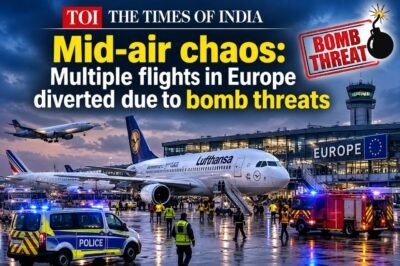
Europe’s aviation sector is facing heightened security concerns following a reported wave of bomb threats that has forced several commercial aircraft to divert from their scheduled routes, disrupting air traffic and creating uncertainty among passengers. The incidents have placed aviation authorities, airport security agencies and major airlines on high alert, highlighting the growing vulnerability of international air travel to malicious digital threats.
According to the reported developments, several flights operating across European airspace received security alerts, prompting emergency diversion procedures. In one notable incident, a London-bound aircraft was reportedly escorted by fighter jets before landing at a secure airport. Airlines, including Lufthansa, Air France and British Airways, have faced operational challenges in managing affected passengers, revised schedules and airport coordination. Although such threats may ultimately prove fraudulent, aviation safety protocols require every credible alert to be treated with utmost seriousness. Aircraft diversions involve complex procedures, including emergency coordination with air traffic control, security inspections, passenger evacuation and detailed searches by specialised bomb-disposal teams.
The financial consequences can also be substantial. Unscheduled landings, additional fuel consumption, airport charges, crew overtime, passenger accommodation and flight cancellations can impose significant costs on airlines. Repeated disruptions may further affect passenger confidence and the stability of the aviation industry. Security experts have also raised concerns about the increasing misuse of digital platforms for spreading anonymous threats and creating large-scale disruption.
The cross-border nature of such incidents makes international intelligence sharing, cybersecurity cooperation and effective investigation increasingly important. The situation underscores the need for stronger aviation security, advanced threat-detection technologies and coordinated international responses. While passenger safety must remain the highest priority, authorities must also develop more effective mechanisms to identify fraudulent threats and prevent unnecessary disruption. Ultimately, safeguarding the skies requires more than advanced aircraft and airport infrastructure; it demands intelligence, international cooperation and unwavering vigilance against emerging security threats.






Leave a Reply