
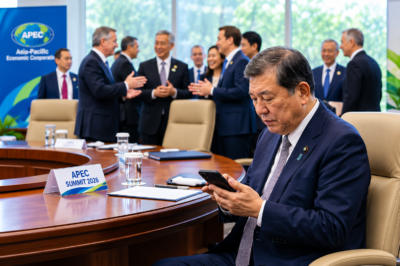
Japan’s Prime Minister Shigeru Ishiba attracted international attention during the Asia-Pacific Economic Cooperation (APEC) Summit in Lima, Peru, where reports of his relatively limited engagement with other world leaders raised questions about Japan’s diplomatic influence and his leadership challenges.
The reported image of Ishiba appearing isolated while leaders such as Joe Biden, Xi Jinping and Justin Trudeau interacted informally became a subject of political discussion. Beyond diplomatic appearances, the situation highlighted the challenges facing Japan at a time of growing geopolitical competition, regional security concerns and changing international relationships.
Ishiba’s domestic political position has also been under pressure following the electoral setback suffered by the ruling Liberal Democratic Party (LDP) and its coalition partner. The loss of their parliamentary majority has made governance more complicated, requiring greater negotiations with opposition parties. Internal political differences and questions about leadership stability have further added to the pressure on his administration.
Japan is simultaneously navigating an increasingly assertive China, North Korea’s security threats and uncertainty surrounding future US policies. The unsuccessful effort to arrange an early meeting with US President-elect Donald Trump also raised concerns about Tokyo’s ability to maintain strong diplomatic engagement with Washington.
Meanwhile, China has continued to strengthen its regional diplomatic presence, creating additional challenges for Japan’s ambition to promote a Free and Open Indo-Pacific. Japan’s leadership remains important in regional trade, investment, maritime security and strategic cooperation.
The country must also address economic concerns, including inflation, an ageing population, workforce shortages and the need for structural reforms.
Ultimately, Ishiba’s challenge is to strengthen domestic political stability while maintaining Japan’s international partnerships and regional leadership. His ability to balance these priorities will be important for Japan’s diplomatic standing and economic interests in an increasingly complex Asia-Pacific environment.






Leave a Reply