
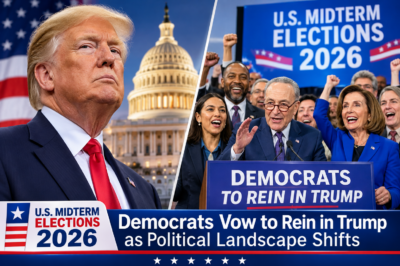
The 2026 U.S. midterm elections are emerging as a significant political contest that could reshape the balance of power in Washington. The elections are expected to serve as a referendum on President Donald Trump’s administration, with the Democratic Party seeking to regain legislative influence and strengthen congressional oversight. The political debate is increasingly centred on executive authority, institutional accountability, economic priorities and the future direction of American governance.
Historically, midterm elections have often resulted in losses for the party holding the presidency. Democrats are seeking to capitalize on this trend by presenting themselves as a force for accountability and institutional checks and balances. Their strategy includes strengthening congressional oversight, reviewing executive decisions, and protecting social programmes, healthcare, environmental regulations and judicial independence.
The White House ballroom has also become a symbol of competing political narratives. While the administration seeks to project presidential authority, critics argue that the emphasis on grandeur contrasts with the economic challenges faced by ordinary Americans. This visual and political contrast is expected to influence campaign messaging.
Economic considerations, including taxation, deregulation, tariffs, healthcare and market stability, will remain central to the electoral debate. Key battleground states such as Michigan, Pennsylvania, Wisconsin, Arizona and Georgia are likely to play a decisive role. Voter concerns regarding reproductive rights, student debt, climate change and household finances may significantly influence the outcome.
The elections also carry global implications, particularly for international trade, NATO relations, climate commitments and America’s diplomatic engagements. A Democratic-controlled Congress could impose greater legislative constraints on the administration, potentially influencing domestic and foreign policy.
Ultimately, the November 2026 midterm elections will test the political strength of the Trump administration and determine whether voters favour continued executive momentum or enhanced congressional oversight. The outcome may have far-reaching consequences for American democracy, economic policy and the United States’ role in global affairs.






Leave a Reply