
Apple appears to be preparing for a significant expansion of its ambitions beyond smartphones and personal computers, with the connected home emerging as a major strategic priority. Speculation about a possible October 13 event has generated considerable interest, particularly because the company may introduce or update products designed to strengthen its position in the smart-home ecosystem.
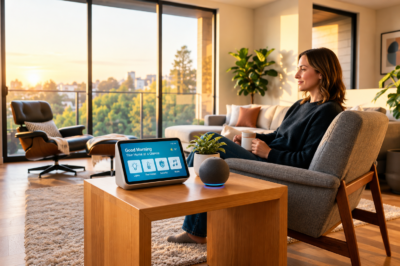
At the centre of this strategy could be a dedicated Smart Home Hub, designed to provide households with a permanent digital control point. Unlike an iPhone or iPad, which users carry from place to place, such a device could remain in the kitchen, living room or another central location. Combining a display, speakers, camera and Siri-based controls, it could allow users to manage lights, locks, thermostats, security systems and other connected appliances while also supporting communication and entertainment.
Privacy could become one of Apple’s strongest advantages. Greater use of on-device processing would potentially allow voice commands and other smart-home functions to be handled locally, reducing dependence on cloud-based services. Integration with Apple’s broader hardware ecosystem could also make the experience more seamless and responsive.
The HomePod Mini may receive an important upgrade as part of this broader strategy. Improved sound quality, enhanced proximity-based features and stronger Thread networking capabilities could make the compact speaker more than an audio device. Multiple HomePod Mini units could contribute to a dependable smart-home network while providing convenient access to Siri throughout the house.
The Apple TV could also assume a larger role. A more powerful processor could transform the device into a stronger gaming and entertainment platform, particularly as Apple continues developing its gaming services. Enhanced integration with other household devices could allow the television to function as another interface for security cameras, automation and communication.
Another crucial element is Matter, the emerging common standard for smart-home devices. Greater Matter compatibility could enable Apple users to operate products from different manufacturers through a more unified environment, reducing the limitations traditionally associated with closed ecosystems.
Taken together, these developments point towards a broader vision in which Apple seeks to connect entertainment, communication, automation and artificial intelligence within the home. The objective is not simply to introduce new hardware, but to establish an integrated digital environment in which devices work together naturally.
If successfully implemented, Apple’s expanded smart-home strategy could strengthen customer loyalty, increase the usefulness of its ecosystem and create new opportunities in an increasingly competitive market. The company’s emphasis on privacy, integrated hardware and software, powerful chips and intelligent automation could give it a distinctive position in the next generation of connected living.
The potential shift is therefore significant: Apple may be moving from being primarily a provider of personal devices to becoming an architect of the digitally connected home.







Leave a Reply