
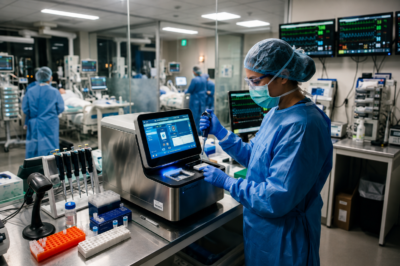
In an Intensive Care Unit (ICU), time is often as critical as medicine itself. For patients battling severe pneumonia, particularly those dependent on ventilators, delays in identifying the responsible pathogen can complicate treatment and increase the risk of serious complications. Conventional laboratory cultures can take 48 to 72 hours, leaving doctors to begin treatment with broad-spectrum antibiotics based largely on clinical judgment.
A new generation of rapid molecular diagnostic tests is changing this approach. Technologies such as multiplex PCR can identify multiple pathogens directly from respiratory samples within a much shorter timeframe. Some platforms can also detect important antibiotic-resistance markers, providing clinicians with valuable information while the patient is still in the critical early stages of treatment.
This is especially significant for ventilator-associated pneumonia (VAP), where infections may involve organisms such as Staphylococcus aureus, Pseudomonas aeruginosa and drug-resistant Gram-negative bacteria. Early identification enables physicians to select appropriate antibiotics sooner and, where possible, move away from unnecessarily broad treatment.
The benefits extend beyond individual patients. Rapid diagnosis can strengthen antibiotic stewardship by reducing unnecessary exposure to powerful medicines. Narrowing treatment once the likely pathogen is identified can help limit antibiotic resistance and reduce disruption to the body’s beneficial microbiome.
There are also potential economic advantages. Faster clinical decisions may contribute to shorter periods of mechanical ventilation, reduced ICU stays and more efficient use of hospital resources. Real-time diagnostic information can also give medical teams greater confidence when making high-pressure treatment decisions.
However, challenges remain, including the cost of molecular testing, laboratory infrastructure, round-the-clock availability and the need to interpret rapid results alongside clinical assessment and conventional cultures.
The future of critical care is increasingly moving toward diagnostic-led, precision medicine. By shortening the distance between infection, diagnosis and treatment, rapid testing offers a powerful tool to improve patient care while protecting antibiotics for the future.
In the modern ICU, every hour matters—and faster answers can make a profound difference.






Leave a Reply