
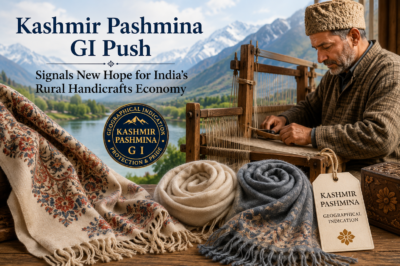
From the windswept highlands of Ladakh to the looms of Kashmir, Pashmina represents far more than luxury—it is a centuries-old story of nature, craftsmanship and rural livelihoods. As efforts to secure Geographical Indication (GI) protection gather momentum, the focus is shifting towards safeguarding the authenticity of this iconic Indian craft and the artisans who keep its tradition alive.
Known globally for its extraordinary softness and warmth, Pashmina is derived from the fine undercoat of the Changthangi goat, found in the high-altitude landscapes of Ladakh. Exposed to some of the harshest Himalayan winters, these goats develop an exceptionally fine natural fibre for insulation. With fibre thickness generally ranging between 12 and 16 microns, Pashmina has earned a reputation as one of the world’s most prized natural fibres.
A Craft Shaped by Centuries of Tradition
The story of Kashmir Pashmina is deeply connected with the cultural history of the Kashmir Valley. Over generations, Kashmiri artisans transformed a delicate mountain fibre into exquisite textiles through painstaking hand-spinning, weaving and embroidery.
The production process remains remarkably intricate. Raw fleece is carefully cleaned and dried before being hand-spun by women artisans using the traditional yinder, a wooden spinning wheel. The delicate yarn is then woven on wooden looms, requiring considerable skill to achieve the characteristic softness and lightness of the fabric. Washing, finishing and, in many cases, elaborate embroidery complete the transformation.
Traditional motifs such as paisleys, florals and nature-inspired designs continue to dominate Pashmina aesthetics, while techniques such as Kashida and Kani embroidery add another dimension of artistry.
GI Protection: A Shield Against Imitation
The growing popularity of Pashmina has also brought a serious challenge—the proliferation of counterfeit and non-genuine products sold under the Pashmina name. Such products not only confuse consumers but also undermine the livelihoods of genuine artisans.
Against this backdrop, the Craft Development Institute (CDI) has initiated efforts towards securing Geographical Indication registration for Kashmir Pashmina under the Geographical Indications of Goods Act.
A GI tag can strengthen the identity and credibility of a regional product by providing legal protection against misuse of its geographical name. For authentic Pashmina producers, such recognition could enhance market confidence, strengthen brand value and create better opportunities in domestic and international markets.
From Himalayan Fibre to Global Luxury
The significance of Pashmina extends well beyond Kashmir. Its production creates a livelihood chain involving goat rearers, fibre collectors, spinners, weavers, dyers, embroiderers and finishing artisans. Thousands of families are connected directly or indirectly with this traditional ecosystem.
At the same time, Pashmina offers an important example of sustainable and responsible luxury. Produced from a naturally occurring animal fibre and transformed through predominantly traditional, skill-intensive processes, each authentic piece carries a distinctive human touch that mass-produced alternatives cannot easily replicate.
Preserving the Past, Securing the Future
The future of Kashmir Pashmina depends on successfully combining heritage with modern market systems. GI protection, quality certification, design development, artisan training, branding, digital commerce and international market access can collectively strengthen the craft’s position in the global luxury market.
Ultimately, protecting Pashmina means protecting more than a textile. It means safeguarding the knowledge of generations, supporting Himalayan and Kashmiri communities, and preserving a remarkable connection between mountain ecology and human craftsmanship.
Kashmir Pashmina is not merely woven—it is inherited, perfected and passed forward. Its true luxury lies not only in the fineness of its fibre, but in the thousands of skilled hands and centuries of tradition woven into every thread.





Leave a Reply