
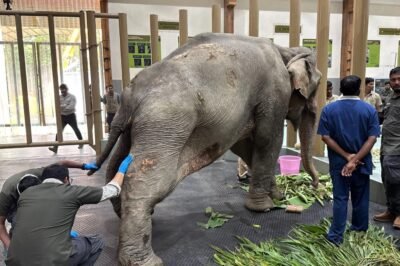
Jayamati was swept away by the powerful floodwaters during the second week of July. Following a coordinated rescue effort involving local residents and government agencies, she was safely rescued. However, the disaster left her with several deep wounds on her forehead, right ear, tail region, inner left thigh and abdomen. A deep wound near her external genital area had also become infested with maggots, causing considerable pain.
Her right eye suffered severe trauma, resulting in permanent loss of vision, with continuous watering from the injured eye. Her condition was further complicated by an old injury to her left hind leg. The leg had reportedly been fractured when she was previously used for timber transportation, leaving her with a long-standing limp and considerable difficulty in movement.
Following her rescue, Jayamati received initial veterinary care, including wound dressing, pain management, multivitamin and mineral supplements and other supportive treatment. However, considering the extent of her injuries, advanced age and pre-existing physical disability, specialised medical intervention became necessary.
Carefully Planned Medical Airlift
To reduce the physical strain of a long road journey, Jayamati was transported by air to Vantara in Jamnagar. The transfer involved close coordination among veterinarians, wildlife-care specialists and logistics teams, with her health and safety given the highest priority throughout the journey.
At Vantara, specialists will conduct a comprehensive health assessment and determine the course of further treatment. Specialised care will focus on her injured eye, complex wounds, nutrition, medication and overall rehabilitation.
The airlift is described in the source as the first such initiative in India to transport an elephant by air specifically for emergency medical treatment.
Strengthening Wildlife Healthcare Infrastructure
Jayamati’s case has also highlighted the need for advanced wildlife healthcare facilities closer to natural habitats, particularly in regions vulnerable to floods and human-wildlife conflict.
Vantara has proposed establishing three specialised wildlife treatment centres in Assam, including a dedicated facility for elephants. These centres are intended to provide species-specific emergency care closer to wildlife habitats and reduce the need for injured animals to undertake long and stressful journeys for treatment.
The proposed centres would function independently under the Assam Forest Department, strengthening local veterinary capacity and ensuring advanced treatment is available closer to the animals’ natural surroundings.
Importantly, Jayamati’s stay at Vantara is not intended as a permanent relocation. Once she has recovered and is physically fit, she is expected to be returned to her natural habitat.
For now, the specialist veterinary team’s priority is clear: provide Jayamati with appropriate medical treatment, nutrition and intensive care, helping the flood survivor regain her health and return to a normal life.




Leave a Reply