
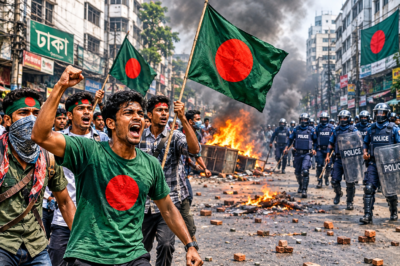
Bangladesh is passing through one of the most challenging phases in its political history, as mounting unrest, political polarization and economic uncertainty threaten the country’s fragile transition towards democracy. The possibility of former Prime Minister Sheikh Hasina’s return from India has further intensified tensions, triggering strong reactions among student groups, political parties and supporters of the interim administration led by Nobel laureate Muhammad Yunus.
The political upheaval, which followed the July 2024 student-led uprising and Hasina’s departure in August 2024, has exposed deep-rooted institutional weaknesses, public dissatisfaction and divisions within Bangladeshi society. Reports of violent clashes, targeted attacks, arrests, arson and deteriorating law-and-order conditions have raised serious concerns about the country’s stability. Meanwhile, legal proceedings against the former Prime Minister and demands for accountability from the families of victims have added another dimension to the crisis.
The economic consequences are equally concerning. Bangladesh’s Ready-Made Garment (RMG) industry, which contributes more than 80 per cent of the country’s export earnings, faces disruptions due to factory closures, transportation difficulties and declining investor confidence. Inflation, pressure on foreign exchange reserves and uncertainty over foreign investment are further complicating economic recovery.
The developments also carry significant geopolitical implications, particularly for India. The longstanding strategic partnership between New Delhi and Dhaka, encompassing border security, connectivity, trade and cooperation against insurgency in India’s Northeast, makes political stability in Bangladesh critically important for regional security. China’s growing economic influence and the interests of Western countries add further complexity.
Ultimately, Bangladesh needs an inclusive political dialogue, institutional reforms, an impartial justice system and a credible roadmap towards democratic elections. The priority must be to restore public confidence, protect human rights and revive economic stability. The sacrifices made by its people should lead to a peaceful, democratic and prosperous future rather than another prolonged cycle of political confrontation.





Leave a Reply