
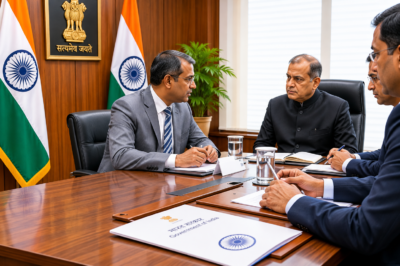
Bangladesh’s Foreign Ministry is examining a passport application from former Prime Minister Sheikh Hasina, currently residing in India following the collapse of her government in August 2024. The development has emerged as a significant political and diplomatic issue, highlighting the challenges confronting Bangladesh’s interim administration led by Nobel laureate Muhammad Yunus.
Hasina fled Dhaka on August 5, 2024, following a student-led uprising that escalated into nationwide protests against her government. Subsequently, Bangladesh revoked her diplomatic passport, while numerous legal cases involving allegations of serious human rights violations were initiated against her. Her application for a regular passport has now raised questions regarding citizenship rights, judicial accountability and international mobility.
Under Bangladesh’s Passport Order, 1973, authorities can refuse travel documents under specified legal circumstances, including certain criminal proceedings and public-interest considerations. The government must, however, ensure that its decision complies with legal procedures and principles of fairness.
The issue also carries significant diplomatic implications for relations between Dhaka and New Delhi. Bangladesh has reportedly sought Hasina’s extradition to face trial, while her continued presence in India places the Indian government in a sensitive diplomatic position. The bilateral extradition treaty provides a legal framework, although its implementation may involve complex considerations.
The decision could also influence Bangladesh’s political stability, international reputation and investor confidence. Observers are closely watching whether the interim government can balance public demands for accountability with due process and democratic principles.
Ultimately, Sheikh Hasina’s passport application represents more than an administrative matter. It has become a test of Bangladesh’s commitment to the rule of law, its approach towards political accountability and its evolving relationship with India during a critical transitional period.






Leave a Reply