
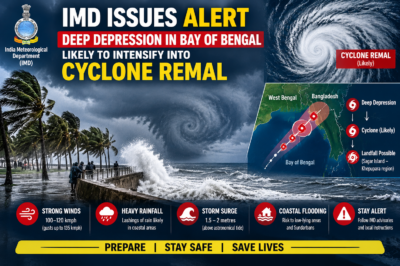
The India Meteorological Department (IMD) has warned of a developing cyclonic system over the Bay of Bengal, identified in the supplied report as Cyclone Remal, raising concerns over the safety of coastal communities in West Bengal and neighbouring Bangladesh. The system highlights the vulnerability of the region to severe weather, including powerful winds, torrential rainfall and storm surges capable of inundating low-lying areas.
Coastal Areas Face Significant Risks
According to the report, the system is expected to intensify, with wind speeds potentially reaching 100–120 kmph and gusts of up to 135 kmph. The projected landfall corridor between Sagar Island in West Bengal and the Khepupara region of Bangladesh raises concerns for vulnerable coastal districts, particularly North and South 24 Parganas.
Storm surges, heavy rainfall and high tides could damage homes, agricultural land, roads and embankments. The Sundarbans, despite their protective mangrove forests, remain particularly vulnerable to coastal flooding and ecological damage.
Economic and Infrastructure Impacts
A severe cyclone could disrupt port operations, maritime transport and supply chains, affecting the movement of essential commodities and industrial goods. Agriculture is also at risk, as excessive rainfall and saline-water intrusion can damage paddy, jute and vegetable crops, threatening farmers’ incomes and local food supplies.
Power transmission networks, telecommunications and transport infrastructure may suffer damage, potentially interrupting electricity, communication and commercial activities. Property, marine and agricultural insurance providers could also face increased claims.
Disaster Preparedness and Emergency Response
Timely evacuation, cyclone shelters, emergency medical supplies and reliable early-warning systems are essential to minimise casualties and property losses. Disaster response agencies, local administrations, the Navy and the Coast Guard play important roles in rescue operations and emergency assistance.
Residents in vulnerable areas should follow official IMD advisories, avoid coastal waters and comply with evacuation instructions issued by local authorities.
Climate Resilience and Long-Term Recovery
The threat of intensifying cyclones underlines the importance of strengthening coastal infrastructure, improving disaster preparedness and protecting natural barriers such as the Sundarbans mangroves. Climate-resilient housing, improved drainage, stronger embankments and reliable communication systems can reduce future risks.
Cyclone preparedness must extend beyond immediate rescue operations to long-term resilience. Coordinated action by governments, communities and disaster-management agencies is essential to protect lives, safeguard livelihoods and ensure sustainable development across the Bay of Bengal region.






Leave a Reply