
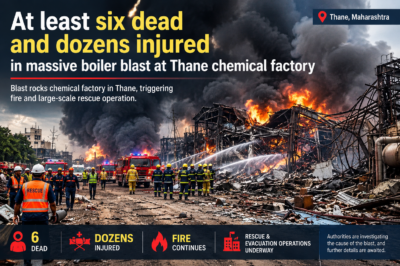
A devastating explosion at Amudan Chemicals in the Dombivli industrial area of Maharashtra’s Thane district caused widespread destruction, casualties and serious concerns over industrial safety. The blast, which reportedly occurred at around 1:40 p.m. on a Thursday, was powerful enough to shatter windows in nearby buildings and send thick clouds of smoke into the surrounding area. The incident highlighted the risks associated with hazardous industrial operations in densely populated regions.
The explosion reportedly originated in the boiler section of the factory in Phase II of the Dombivli Maharashtra Industrial Development Corporation (MIDC) area. The initial blast was followed by fires that spread to neighbouring industrial units, damaging property and disrupting business activities. More than 15 fire engines were reportedly deployed, while emergency personnel worked to control the blaze and rescue those trapped inside the damaged premises.
Initial reports indicated at least six fatalities and more than 60 injuries, including burns, smoke inhalation and trauma caused by flying debris. Local hospitals were placed on alert, and specialised disaster-response teams assisted firefighters and police in search-and-rescue operations. The possibility of further structural collapse and chemical contamination added to the challenges faced by emergency personnel.
The incident has also raised questions about industrial maintenance, boiler safety and compliance with statutory requirements. Investigators are expected to examine equipment conditions, maintenance records, pressure-control mechanisms and the factory’s adherence to applicable safety regulations. However, the precise cause of the explosion and the responsibility for the incident must be established through an impartial investigation.
Beyond the immediate human tragedy, the disaster has affected neighbouring businesses, workers’ livelihoods and residents living close to the industrial estate. It has renewed demands for effective safety inspections, appropriate separation between hazardous industries and residential areas, and stronger enforcement of environmental and fire-safety standards.
The Dombivli explosion underscores the urgent need to place worker protection and public safety at the centre of industrial development. Regular technical audits, emergency preparedness, transparent regulatory oversight and strict action against proven violations are essential to prevent similar tragedies.
Ultimately, industrial progress must be accompanied by accountability and responsible management. Protecting human life should remain a fundamental priority, ensuring that economic growth does not come at the cost of workers’ safety and the well-being of surrounding communities.






Leave a Reply