
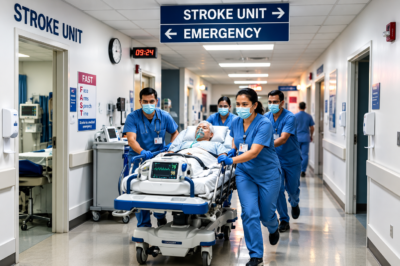
The COVID-19 pandemic transformed healthcare systems across the world almost overnight. Hospitals were forced to redirect personnel, beds, equipment and emergency resources towards controlling the rapidly spreading virus. While this response was essential, it also created a less visible crisis: patients suffering from other medical emergencies, particularly stroke, frequently faced delays in diagnosis, treatment and rehabilitation.
Stroke is among the most time-sensitive medical emergencies. The principle that “time is brain” reflects the irreversible loss of brain tissue that can occur when blood flow is interrupted. During the pandemic, however, the emergency pathways that had been developed to deliver rapid stroke treatment were disrupted by infection-control procedures, staff shortages, hospital overcrowding and public fear of visiting medical facilities.
An analysis highlighted by the European Medical Journal (EMJ) illustrates how extensively these disruptions affected stroke services. Across different healthcare settings, patients often reached hospitals later, diagnostic procedures took longer and access to specialised interventions became more difficult. The consequences extended beyond the initial emergency, affecting rehabilitation and long-term recovery.
Disruption of the Stroke Treatment Chain
Under normal circumstances, stroke care follows a carefully coordinated sequence. Emergency services identify the symptoms, transport the patient rapidly, diagnostic imaging determines the type of stroke, and eligible patients receive treatments such as thrombolysis or mechanical thrombectomy as quickly as possible.
The pandemic introduced multiple obstacles into this process. COVID screening, infection-control protocols, isolation requirements and changes in hospital layouts added additional steps before patients could receive neurological assessment and treatment. In some hospitals, specialist stroke units and intensive-care facilities were also repurposed to accommodate patients with severe COVID-19.
Consequently, patients who had already received emergency treatment could still face difficulties obtaining specialised neurological monitoring, rehabilitation and multidisciplinary care.
The Critical Importance of Time
For stroke patients, even relatively short delays can influence the eventual level of disability. During the pandemic, delays were reported at several stages—from the patient’s decision to seek help to ambulance transport, hospital admission, imaging and definitive treatment.
Another important phenomenon was the decline in reported stroke admissions in some locations during the early pandemic. This did not necessarily indicate that fewer people were experiencing strokes. Instead, many individuals with milder symptoms reportedly avoided hospitals because they feared COVID-19 infection. Some patients therefore remained at home until their symptoms became severe or permanent neurological damage had already occurred.
This “missing stroke” phenomenon demonstrates how public perception can influence medical outcomes during a health emergency.
Staff Shortages and Resource Reallocation
Healthcare workers were another critical component of the disruption. Neurologists, specialist nurses, therapists and other professionals were frequently reassigned to COVID-related duties. This reduced the availability of dedicated stroke teams at a time when rapid specialist intervention was essential.
Hospital logistics also became considerably more complicated. Infection-control zones, protective equipment, sanitation procedures and restricted movement through hospital corridors could increase the time required to transport patients for diagnostic imaging or intervention.
Although these precautions were necessary to control infection, they presented significant challenges for a medical condition in which treatment speed directly affects neurological recovery.
Fear Became an Additional Barrier
The pandemic also changed the behaviour of patients and families. Public health campaigns encouraging people to remain at home were necessary to reduce transmission, but they sometimes created confusion about when emergency medical attention was still essential.
Symptoms such as sudden weakness, facial drooping, difficulty speaking, loss of balance or abrupt vision problems require immediate medical evaluation. Yet some people delayed contacting emergency services because hospitals were perceived as high-risk environments.
Older people were particularly vulnerable. Social distancing and isolation reduced opportunities for relatives, neighbours and caregivers to recognise neurological symptoms. As a result, some patients reached medical facilities only after the most effective treatment window had passed.
The Rehabilitation Gap
The impact of the pandemic did not end when patients left the hospital. Rehabilitation services were also disrupted. Physiotherapy, occupational therapy and speech therapy programmes were reduced, postponed or shifted to remote formats in many settings.
Telemedicine provided an important alternative and helped maintain continuity of care, but it could not always substitute for intensive, hands-on rehabilitation. For some survivors, interruptions during the early stages of recovery may have contributed to persistent physical, cognitive and communication difficulties.
The wider consequences include greater dependence on family caregivers, increased demand for long-term support and additional economic pressure on households and healthcare systems.
Building More Resilient Stroke Services
The experience of COVID-19 provides an important lesson for future health emergencies: essential emergency services must remain operational even when healthcare systems are under extraordinary pressure.
Stroke pathways should therefore be protected through dedicated emergency protocols, adequate specialist staffing and clearly defined arrangements for diagnostic imaging and intervention. Telestroke services can provide specialist expertise to hospitals where neurological resources are limited, while rapid diagnostic and infection-screening systems can help prevent unnecessary delays.
Public communication is equally important. Future emergency campaigns should make it unmistakably clear that symptoms of stroke and other life-threatening conditions require immediate medical attention, even during an infectious-disease outbreak.
The pandemic demonstrated that a healthcare system can become vulnerable when all available resources are concentrated on a single crisis. Protecting patients with stroke requires a coordinated approach that combines emergency preparedness, specialist expertise, technology, public awareness and uninterrupted rehabilitation.
The central lesson is straightforward: a pandemic must not become a reason for other medical emergencies to go untreated. The progress achieved over decades in creating rapid and effective stroke-care networks must be protected and strengthened so that they can continue functioning during the next major global health crisis.
Ultimately, strengthening the stroke-care chain is not simply a matter of improving clinical efficiency. It is essential to protecting lives, reducing preventable disability and ensuring that healthcare systems remain resilient when faced with the next unforeseen emergency.






Leave a Reply