Pezeshkian’s diplomatic overture signals a possible recalibration of Tehran’s approach to Washington—but deep mistrust, the nuclear question and regional conflicts remain formidable obstacles.
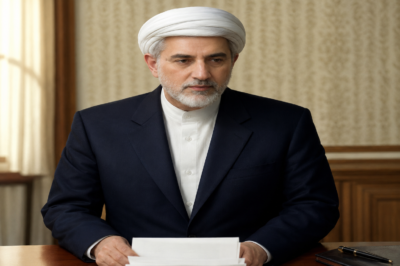
In a development that could have far-reaching consequences for the Middle East and the wider international order, Iranian President Masoud Pezeshkian has signalled Tehran’s willingness to reconsider its long-standing confrontation with the United States.
Speaking ahead of the United Nations General Assembly, Pezeshkian presented an unexpected proposition: Iran could be prepared to move away from confrontation and enter a new phase of engagement with Washington if the United States and its allies are prepared to reciprocate. Yet his message carried an important qualification. Tehran, he suggested, would approach any negotiations not as a weakened state seeking rescue, but from what he described as a “position of power.”
That distinction is central to understanding the Iranian approach. Pezeshkian is not presenting diplomacy as surrender. Instead, he appears to be attempting to redefine negotiations as a strategic choice by a country that believes it has endured years of sanctions and pressure and can now bargain from a stronger position.
The question, however, is whether this opening can translate into concrete diplomacy—or whether decades of mistrust will once again overwhelm the possibility of compromise.
A Reformist President Within a Hardline System
Pezeshkian’s political background makes his message particularly significant.
A heart surgeon by profession and former health minister, Pezeshkian emerged as a comparatively reform-minded figure within Iran’s political establishment. His political campaign emphasised constructive engagement with the outside world and a willingness to address some of the social and economic pressures confronting ordinary Iranians.
But the Iranian presidency operates within a political system in which ultimate authority rests with the Supreme Leader, Ayatollah Ali Khamenei. This institutional reality means that any major shift in relations with Washington would require broader acceptance within Iran’s powerful political and security establishment.
Pezeshkian’s diplomatic approach therefore represents both an opportunity and a political balancing act. He must demonstrate to the international community that Iran is open to dialogue while simultaneously convincing domestic hardliners that engagement does not amount to capitulation.
The presence of experienced diplomats, including Foreign Minister Abbas Araghchi, further strengthens Tehran’s diplomatic credentials. Araghchi was closely involved in the negotiations that produced the 2015 nuclear agreement, giving the Iranian leadership access to officials with considerable experience in high-stakes negotiations with Western powers.
Why “Position of Power” Matters
Pezeshkian’s emphasis on negotiating from a “position of power” is more than diplomatic language. It is also a message to audiences inside Iran.
Any overture towards Washington carries political risks. Hardline elements within Iran could portray concessions to the United States as weakness or betrayal. By insisting that Iran is not negotiating from desperation, Pezeshkian seeks to protect the domestic legitimacy of diplomacy.
There is also a strategic dimension.
Over the past decade, Iran has expanded its missile and drone capabilities and strengthened its regional influence. Its relationships with armed groups and political partners across the Middle East have given Tehran significant leverage in regional affairs.
For Pezeshkian, these capabilities provide bargaining power. Iran can therefore argue that it has survived the era of “Maximum Pressure” and that Washington now has an incentive to negotiate rather than continue an open-ended cycle of sanctions and confrontation.
The message is clear: Iran wants dialogue, but it does not want to enter the dialogue as a defeated party.
Behind the Diplomacy Lies a Serious Economic Challenge
While the language of strength is politically important, Iran’s economic difficulties cannot be ignored.
Years of US-led sanctions have severely restricted Iran’s access to international markets and financial systems. Inflation, currency depreciation and declining purchasing power have placed enormous pressure on ordinary citizens.
For the Pezeshkian administration, economic performance is likely to be one of the most important measures of political credibility.
Sanctions relief could potentially enable Iran to increase oil exports, improve access to international markets and generate greater economic activity. The alternative strategy of strengthening economic relations with countries such as China and Russia has provided Tehran with important economic lifelines, but it has not fully compensated for Iran’s restricted access to the broader global economy.
This creates a fundamental incentive for diplomacy.
For Iran, improved relations with the West are not merely about international prestige. They are closely connected to the economic expectations of its population and the long-term stability of the government.
The Nuclear Question Remains at the Centre
No discussion of US-Iran relations can avoid the nuclear issue.
The 2015 Joint Comprehensive Plan of Action, or JCPOA, represented the most significant diplomatic achievement between Iran and major world powers in decades. The agreement placed restrictions on Iran’s nuclear programme in exchange for sanctions relief.
However, the United States’ withdrawal from the agreement in 2018 fundamentally altered the diplomatic landscape. Iran subsequently expanded aspects of its nuclear programme beyond the original limits.
Today, the nuclear issue represents both the greatest obstacle and potentially the greatest opportunity for renewed negotiations.
Iran has repeatedly indicated that it is prepared to discuss its nuclear programme, but Tehran also wants guarantees that any future agreement will not simply be abandoned by a subsequent US administration.
Washington, meanwhile, faces the challenge of determining whether Iranian commitments can be independently verified and whether restrictions on the nuclear programme can be made sufficiently durable.
The International Atomic Energy Agency’s monitoring role will therefore remain crucial. Without credible verification, any new nuclear agreement would face serious questions over implementation and compliance.
Gaza and the Regional Security Equation
The broader Middle Eastern security environment makes diplomacy even more complicated.
The war in Gaza, tensions involving Israel and Hezbollah, and continuing conflicts involving armed groups supported by Iran have created a regional environment in which a single escalation can rapidly involve multiple actors.
Iran has sought to portray itself as opposed to the expansion of regional conflict while continuing to support groups that Washington and its allies regard as destabilising.
This contradiction represents one of the biggest challenges to any US-Iran rapprochement.
A comprehensive diplomatic settlement would therefore have to go beyond the nuclear issue. Questions surrounding Iran’s regional military activities, missile programme and relationships with armed groups would inevitably enter the negotiations.
That could turn any proposed agreement into something far more ambitious than a revival of the JCPOA.
Can Trust Be Rebuilt?
The greatest obstacle may not be technical but psychological.
Washington and Tehran have accumulated decades of hostility, sanctions, military confrontations and political rhetoric. Each side has reasons to distrust the other.
Iran fears that any agreement could again be abandoned by a future US administration. The United States and its allies, meanwhile, remain concerned that Iran could use negotiations to obtain economic relief without making sufficiently durable changes to its nuclear and regional policies.
This creates a classic diplomatic dilemma: neither side wants to make the first major concession without receiving assurances that the other side will honour its commitments.
Breaking this cycle would require carefully sequenced confidence-building measures rather than an immediate grand bargain.
Initial steps could include limited sanctions relief, nuclear monitoring, humanitarian arrangements, prisoner issues and regional de-escalation. Successful implementation of smaller agreements could then create the political space for more ambitious negotiations.
A New Diplomatic Opening—or Tactical Manoeuvring?
The international community will inevitably debate Tehran’s intentions.
Supporters of engagement will argue that diplomacy should be tested whenever an adversary signals willingness to talk. Critics will question whether the initiative represents a genuine strategic transformation or simply an attempt to obtain economic relief while preserving Iran’s existing regional and nuclear leverage.
The answer may ultimately depend less on speeches than on actions.
If Tehran is prepared to accept meaningful and verifiable nuclear restrictions, participate in regional de-escalation and create greater transparency, Washington would have stronger grounds for reciprocal engagement.
Conversely, if diplomatic rhetoric is not accompanied by measurable changes, scepticism will quickly return.
The Road Ahead
Pezeshkian’s message nevertheless represents an important shift in tone.
For years, US-Iran relations have been dominated by the language of pressure, resistance, deterrence and retaliation. The suggestion that Iran could consider laying down its arms in exchange for reciprocal steps from the United States introduces a different vocabulary—one centred on negotiation and mutual interests.
But diplomacy will succeed only if both sides are willing to move beyond rhetoric.
Iran wants sanctions relief, economic integration and recognition of its strategic interests. The United States wants verifiable limits on Iran’s nuclear programme, greater regional stability and assurances regarding Iran’s military activities.
The space between these objectives is wide, but it is not necessarily impossible to bridge.
The real test of Pezeshkian’s “position of power” will therefore be whether it can become a position for peace.
For Washington and Tehran, the choice is ultimately between continuing a cycle of confrontation that has already lasted decades or attempting the far more difficult task of rebuilding trust through sustained, verifiable and reciprocal diplomacy.
The world will be watching closely—not merely for what Iran says next, but for what both sides are prepared to do.





Leave a Reply