
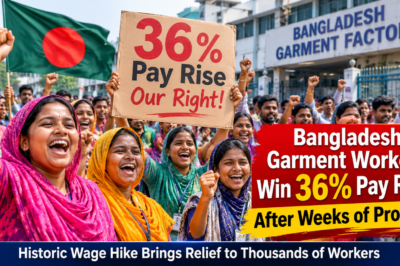
Bangladesh’s garment industry, one of the largest pillars of its national economy, has witnessed a significant development following weeks of labour unrest and demonstrations. Garment workers have reportedly secured a 36% increase in their minimum monthly wages after negotiations involving labour representatives, factory owners and government authorities. The agreement marks an important step towards addressing workers’ financial difficulties amid rising inflation and the increasing cost of living.
The Readymade Garment (RMG) sector employs approximately four million people and contributes substantially to Bangladesh’s export earnings. Its global reputation as a major apparel manufacturing destination depends not only on production capacity and competitive pricing but also on the welfare, skills and productivity of its workforce.
For years, garment workers have faced mounting financial pressures due to rising prices of essential commodities, housing, transportation and energy. The recent protests highlighted their demand for fair compensation, better working conditions and greater recognition of their contribution to the country’s economic growth. The wage agreement therefore represents more than a financial adjustment; it reflects the importance of workers’ rights and collective bargaining.
The development also carries significant implications for international fashion brands that depend on Bangladesh’s manufacturing ecosystem. Global retailers and sourcing companies must recognise that ethical production requires fair wages, safe workplaces and responsible purchasing practices. The additional labour costs may encourage manufacturers to improve productivity, adopt modern technologies and invest in workers’ skill development.
However, the sustainability of the wage increase will depend on effective implementation, inflation management and cooperation among the government, factory owners, labour organisations and international buyers.
Ultimately, Bangladesh’s experience sends an important message to the global apparel industry: economic competitiveness should not come at the expense of workers’ dignity and livelihood. A sustainable garment industry must ensure that those who create its products receive a fair share of the value they generate.





Leave a Reply