
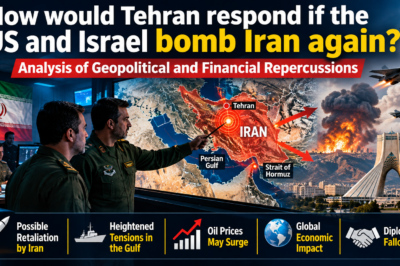
The longstanding shadow conflict involving Iran, Israel and the United States has increasingly shifted towards direct military confrontation. Iran’s missile and drone attacks in April and October 2024 marked a significant departure from its traditional strategy of relying primarily on regional proxies. In the event of renewed US-Israeli bombing, Tehran is likely to adopt a multifaceted response combining military retaliation, economic pressure and diplomatic engagement.
Iran’s extensive missile and drone arsenal would remain its principal instrument of deterrence. Direct strikes against Israeli or American military assets, alongside coordinated actions by regional allies such as Hezbollah, the Houthis and armed groups in Iraq, could expand the conflict across multiple fronts. However, such escalation would also expose Iran to the risk of severe military and infrastructural damage.
The Strait of Hormuz represents another critical strategic leverage point. Any disruption to this vital maritime corridor, through which a substantial share of global oil supplies passes, could trigger sharp increases in energy prices, inflation and international economic instability. Iran may also employ cyber operations against financial, energy and logistical infrastructure as an alternative means of retaliation.
Domestically, military confrontation could strengthen the ruling establishment through nationalist sentiment, while simultaneously intensifying economic hardship and public dissatisfaction. The government would therefore need to balance demonstrating military strength with protecting national stability.
Iran’s strategic partnerships with Russia and China may provide diplomatic support, economic assistance and avenues for cooperation, although direct military intervention by either country remains uncertain.
Ultimately, Tehran’s response would depend on the scale of military strikes, the resilience of its defence capabilities and the broader geopolitical environment. The challenge for Iran would be to establish credible deterrence without triggering a prolonged regional war. Effective diplomacy and international de-escalation remain essential to preventing a wider conflict with far-reaching global consequences.






Leave a Reply