
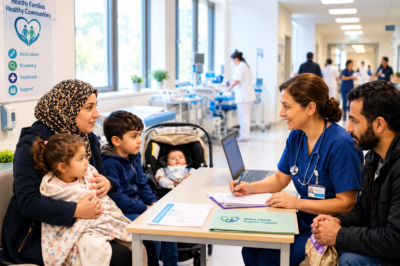
The movement of people across borders has become an important public-health issue for Europe. Conflict, economic hardship, displacement and changing environmental conditions continue to influence migration patterns, while healthcare systems face the challenge of ensuring that vulnerable populations are not left without essential medical services.
Recent analysis of European infectious-disease surveillance has drawn attention to differences in the burden of diseases such as tuberculosis (TB), HIV and viral hepatitis among migrant and foreign-born populations. These differences, however, cannot simply be attributed to migration itself. Health risks are influenced by conditions before, during and after migration, including housing, employment, poverty, access to healthcare and legal or administrative restrictions.
Tuberculosis illustrates the complexity of the issue. In several European countries with relatively low overall TB incidence, a substantial share of reported cases occurs among people born outside the country. Crowded accommodation, inadequate ventilation and delayed access to diagnosis can increase the risk of transmission. Early detection and uninterrupted treatment are therefore important both for individual health and wider disease control.
HIV and viral hepatitis present additional challenges. Some migrants may arrive from regions where these infections are more prevalent, while others may acquire infections after arrival. Delayed diagnosis can prevent timely treatment and contribute to poorer health outcomes. Hepatitis B and C can remain undetected for years and may eventually lead to serious liver disease if untreated.
Social conditions are central to understanding these disparities. People experiencing insecure employment, overcrowded housing or financial hardship can face greater difficulty obtaining preventive care and maintaining regular treatment. Language differences, unfamiliarity with healthcare systems and concerns about administrative consequences may create additional barriers.
European health authorities therefore face the task of combining infectious-disease control with equitable healthcare access. Voluntary and non-stigmatizing screening, vaccination where appropriate, accessible primary care, interpretation services and community-based health programmes can help identify illness earlier and connect people with treatment.
The broader lesson is that migrant health cannot be separated from public health. Effective disease prevention requires reliable surveillance, early diagnosis, continuity of care and attention to the social circumstances in which people live. A coordinated, evidence-based approach can help European healthcare systems respond to changing patterns of migration while protecting the health of communities as a whole.






Leave a Reply