
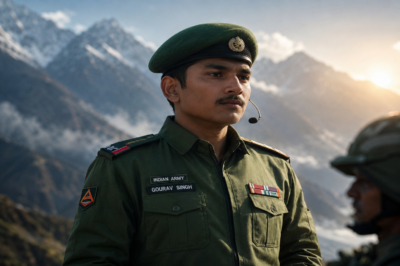
New Delhi: The complex security environment of South Asia, shaped by the India-Pakistan rivalry and the presence of nuclear weapons on both sides, has once again come under scrutiny following remarks attributed to former Chief of Defence Staff General Anil Chauhan regarding the possible consideration of Skardu as a military target.
The discussion offers an insight into the difficult calculations involved in selecting military objectives during a crisis, particularly when the risk of escalation remains a central concern.
Skardu’s Strategic Significance
Located in the Gilgit-Baltistan region of Pakistan-administered Kashmir, Skardu occupies an important geographical position near the Karakoram and the Siachen sector. Its high-altitude location and military infrastructure give it significance for Pakistan’s northern defence arrangements and logistical operations.
The possibility of considering Skardu alongside more established military targets such as Sargodha’s Mushaf Airbase illustrates the changing nature of strategic planning in the region. While Sargodha is located deep inside Pakistan and has historically been an important Pakistan Air Force installation, action against such a target could carry considerably greater escalation risks.
The reported discussion therefore points towards a broader question: how can a country respond decisively to a security challenge while simultaneously attempting to prevent a confrontation from spiralling into a wider conflict?
Escalation Control at the Centre
For nuclear-armed neighbours India and Pakistan, military planning cannot be separated from escalation management. Every conventional military action carries potential political and strategic consequences.
The consideration of different targets, therefore, reflects more than their immediate military value. Intelligence assessments, operational objectives, diplomatic circumstances and the potential reaction of the adversary all influence strategic decision-making.
Technology Changes the Battlefield
India’s expanding air-power capabilities have also transformed the possibilities available to military planners. Modern aircraft, precision-guided weapons, surveillance systems and electronic warfare capabilities have increased the emphasis on stand-off operations and precision.
At the same time, the presence of China in the wider region adds another dimension to the strategic importance of northern areas. Connectivity projects, including the China-Pakistan Economic Corridor, have made the region significant beyond the traditional India-Pakistan military equation.
A New Era of Strategic Uncertainty
The reported remarks attributed to General Chauhan underline an important reality of contemporary South Asian security: military preparedness is increasingly accompanied by careful calibration.
The significance of the Skardu-Sargodha debate lies not simply in which location may have been considered, but in what it reveals about modern conflict planning—where precision, intelligence, technology and escalation control increasingly operate together.
For the region, however, the larger objective remains unchanged: maintaining deterrence while preventing military competition from crossing the threshold into a devastating wider conflict.







Leave a Reply