
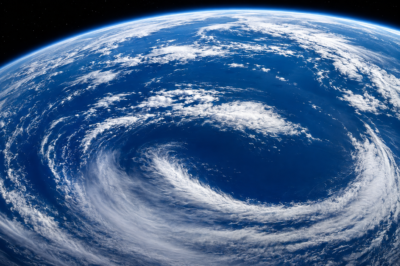
A potentially exceptional El Niño could push temperatures, food prices and extreme weather risks into uncharted territory—raising urgent questions about global preparedness.
The world may be approaching a major climate test.
Meteorological warnings cited in the source material indicate that the developing El Niño event could become one of the most intense recorded in more than a century. If the projections materialise, the phenomenon could have consequences extending far beyond the tropical Pacific, influencing global temperatures, rainfall patterns, agriculture, fisheries, energy systems and public health.
El Niño is not a new phenomenon. It is a naturally recurring component of the El Niño-Southern Oscillation (ENSO), a climate pattern that periodically alters ocean temperatures and atmospheric circulation. What makes the present situation particularly concerning is the interaction between this natural cycle and a planet already experiencing exceptionally high ocean and atmospheric temperatures.
The source material suggests that sea-surface temperature anomalies could potentially exceed 2.5°C above the historical average, a level associated with an exceptionally strong El Niño.
The implications are global. From drought-stricken agricultural regions to flood-prone communities, from fishing economies in the Pacific to energy markets dependent on hydropower, an extreme El Niño could expose vulnerabilities that are often hidden during normal climatic conditions.
What Exactly Is El Niño?
Under normal conditions, trade winds push warm surface water across the tropical Pacific towards Asia. Along the western coast of South America, colder, nutrient-rich water rises from deeper parts of the ocean, supporting one of the world’s most productive marine ecosystems.
During El Niño, these trade winds weaken or change, allowing warm water to move eastward towards the Americas. This redistribution of heat changes atmospheric circulation and can influence weather patterns thousands of kilometres away.
The concern surrounding a potentially “super” El Niño arises from the amount of heat already stored in the world’s oceans.
According to the source material, the ocean is beginning this El Niño cycle from an unusually warm baseline, potentially amplifying the atmospheric response.
In other words, the planet is not entering this natural climate cycle under ordinary conditions. It is entering it against the backdrop of long-term global warming.
History Offers a Warning
El Niño has repeatedly demonstrated its capacity to disrupt societies.
The 1982–83 event caused enormous economic losses and widespread environmental damage. The 1997–98 El Niño became one of the defining climate events of the modern era, producing severe flooding, droughts, wildfires and record temperatures across different parts of the world.
The 2015–16 event provided another warning. It coincided with exceptionally high global temperatures and demonstrated how natural climate variability can interact with a warming planet.
The current projections are alarming because they raise the possibility that an extreme event could challenge these historical benchmarks.
However, history also provides something valuable: experience. Governments, scientists and communities have seen the consequences of major El Niño events before. The question is whether those lessons will be translated into effective preparation.
Climate Change Could Magnify the Impact
El Niño itself is a natural phenomenon and should not be confused with climate change. The concern is how the two processes interact.
Human-induced global warming has increased the amount of heat stored within the Earth’s climate system, with the oceans absorbing the overwhelming majority of the additional heat. This means that an El Niño event develops on a warmer background than in previous decades.
That warmer baseline can intensify heat extremes and alter rainfall patterns.
The source material notes that warmer air can hold more moisture, potentially contributing to heavier rainfall in some regions while worsening evaporation and drought elsewhere.
This creates a striking paradox: the same climate system can produce destructive floods in one part of the world and devastating droughts in another.
Agriculture Could Become the First Major Casualty
Perhaps nowhere is the threat more immediate than agriculture.
Rain-fed farming systems are particularly vulnerable to changes in precipitation. In parts of Southeast Asia, reduced rainfall during El Niño years can put pressure on water supplies and threaten crops such as rice.
Meanwhile, excessive rainfall in other regions can cause flooding, soil erosion, crop disease and damage to agricultural infrastructure.
The consequences do not remain within national borders.
Modern food markets are interconnected. A poor harvest in one major producing country can influence international prices, import bills and consumer inflation elsewhere. Commodities such as sugar, coffee and cocoa are particularly sensitive to weather disruptions.
A severe El Niño could therefore transform a meteorological event into an economic event—driving what economists and market observers often describe as “agflation,” or food-price inflation.
For lower-income households, the consequences could be particularly severe because food represents a larger share of household expenditure.
Fisheries Face Their Own Crisis
The ocean itself could become an economic battleground.
Along the coasts of Peru and Ecuador, nutrient-rich cold-water upwelling supports enormous fish populations. During a strong El Niño, warmer surface waters can suppress this upwelling, reducing the availability of nutrients needed to sustain marine ecosystems.
The result can be a sharp decline in fish stocks and serious economic consequences for fishing communities.
This illustrates one of the most important characteristics of El Niño: its effects are not confined to the atmosphere. They begin with the ocean and ultimately reach farms, factories, markets and households.
A Global Patchwork of Weather Extremes
The impacts of a major El Niño would not be uniform.
In parts of North America, El Niño can influence the jet stream and alter winter precipitation and temperature patterns. Australia can face increased drought and wildfire risks, while parts of Africa can experience sharply contrasting rainfall conditions.
East Africa may see episodes of heavier rainfall and flooding, while Southern Africa can face drought conditions and agricultural stress.
Europe is less directly governed by ENSO than many other regions, but changes in large-scale atmospheric circulation can still influence European weather patterns.
The result is not one global weather pattern but a patchwork of extremes—floods in one region, drought in another, abnormal heat somewhere else and severe storms elsewhere.
The Hidden Threat: Human Health
Climate disasters rarely remain purely environmental problems.
Flooding can overwhelm sanitation systems and increase the risk of waterborne diseases. Drought can force communities to store water in ways that create breeding grounds for mosquitoes. Heatwaves can increase deaths among elderly people, outdoor workers and vulnerable populations.
The psychological consequences are equally important.
Farmers losing crops, families losing homes and communities repeatedly exposed to disasters can experience prolonged stress, anxiety and economic insecurity.
The source material therefore highlights public health preparedness as a critical component of responding to an extreme El Niño.
India and the Food-Security Question
For India, the implications deserve particular attention.
India’s enormous agricultural sector remains highly sensitive to rainfall variability. Changes in monsoon behaviour, reservoir levels, crop yields and water availability can have consequences for both rural livelihoods and food prices.
A major disruption to global agricultural production could also affect international commodity markets and India’s import and export decisions.
The challenge is therefore not simply to predict whether rainfall will be above or below normal. Governments need systems capable of responding rapidly to regional variations, crop-specific risks and sudden changes in commodity markets.
This makes early-warning systems and climate-informed agricultural planning increasingly important.
From Forecasting to Preparedness
The most important question is not whether humanity can prevent El Niño. It cannot.
The real question is whether societies can reduce the damage caused by it.
Governments can strengthen early-warning systems, improve disaster-response mechanisms, protect critical infrastructure and diversify food-supply chains. Farmers can benefit from climate-resilient crop varieties, improved irrigation practices and timely weather information.
Cities can prepare for extreme rainfall and heat. Health authorities can strengthen disease surveillance and heat-response plans. Energy planners can assess the vulnerability of hydropower and electricity networks to drought and changing rainfall patterns.
The source material emphasises that preparedness must become a central element of climate policy rather than an emergency response after disasters occur.
The Bigger Message Behind El Niño
Perhaps the most important lesson from a potentially exceptional El Niño is that climate risk cannot be understood through isolated events.
A warming ocean affects atmospheric circulation. Atmospheric changes affect rainfall. Rainfall affects agriculture. Agriculture affects food prices. Food prices affect household finances. Drought affects energy production. Floods affect infrastructure and public health.
One climate event can therefore travel through the global economy in ways that are difficult to predict but impossible to ignore.
This is why an extreme El Niño should not be viewed merely as another meteorological headline. It is a stress test for the resilience of modern societies.
Conclusion: The Warning Is the Opportunity
The possibility of an exceptionally strong El Niño should serve as a wake-up call.
The world cannot control the natural rhythm of ENSO, but it can control the quality of its preparation. The difference between a severe climate event and a humanitarian catastrophe often lies in the strength of early warnings, infrastructure, institutions and public preparedness.
If forecasts of an extraordinary El Niño are confirmed, the coming months could provide a real-world test of how effectively governments have learned from previous climate disasters.
The lesson is ultimately simple: we may not be able to stop the next El Niño, but we can decide how vulnerable we are when it arrives.
In an increasingly interconnected and warming world, preparedness is no longer an option reserved for the future. It is becoming one of the most important investments of the present.






Leave a Reply