
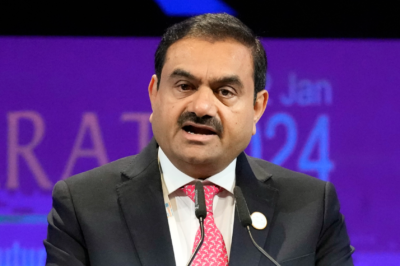
In a recent development, Indian billionaire industrialist Gautam Adani has broken his silence regarding the high-profile bribery indictment against him in the United States. The charges, which stem from an investigation into alleged illegal activities related to his global business empire, have sent shockwaves across both international financial markets and the political sphere in India. Adani, who is the chairman of the Adani Group, one of India’s largest conglomerates with diverse interests ranging from infrastructure and energy to logistics and ports, has vehemently denied the accusations.
The charges in question, filed by U.S. authorities, allege that Adani and his associates engaged in systematic bribery schemes to secure lucrative contracts and political influence in both India and abroad. The indictment follows an extensive investigation by U.S. prosecutors into the Adani Group’s global business operations, with specific focus on the alleged use of corrupt practices to advance its interests.
In an exclusive statement to the media, Gautam Adani responded to the charges, expressing confidence in his innocence and promising to vigorously defend himself in the courts. He claimed that the allegations were part of a coordinated campaign to malign his reputation and undermine the Adani Group’s business operations. He also took to social media platforms to assert his innocence, calling the indictment a “baseless” attack aimed at destabilizing his business empire.
Details of the Bribery Indictment – The U.S. Department of Justice (DOJ) has accused Gautam Adani and several senior executives at the Adani Group of orchestrating a wide-ranging bribery network that allegedly spanned across several countries. According to the indictment, the accused individuals allegedly paid large sums of money to foreign officials, business leaders, and politicians in exchange for favorable business deals, including government contracts, tax breaks, and other regulatory benefits.
The U.S. authorities also claimed that the bribery operations were carefully hidden through a network of shell companies, offshore accounts, and false financial records. Prosecutors allege that the scheme was particularly prevalent in countries where the Adani Group had significant investments or sought to expand its operations, including parts of Africa, the Middle East, and Southeast Asia.
One of the most contentious aspects of the indictment is the claim that the Adani Group made illegal payments to high-ranking officials in the Indian government. These allegations have raised concerns about the potential involvement of political leaders in the bribery scheme. However, as of now, no formal charges have been filed against any Indian politicians.
The indictment has also pointed to significant discrepancies in the financial reports submitted by the Adani Group to regulatory authorities in the U.S. The company allegedly misrepresented its financial dealings to cover up its illicit activities, a practice which, according to prosecutors, enabled the Adani Group to secure favorable treatment from foreign governments and corporations.
Gautam Adani’s Defense – Gautam Adani’s response to the bribery charges has been unequivocal. In his statement, he dismissed the allegations as “false” and “politically motivated.” Adani argued that the charges were an attempt to destabilize his growing empire and disrupt the progress of his business ventures, which he contends have significantly contributed to India’s economy.
Adani has long been considered one of India’s most powerful and influential business figures, with his wealth and influence expanding rapidly in recent years. As the leader of the Adani Group, Adani has overseen the construction of massive infrastructure projects across India and internationally, including ports, airports, and power plants. The conglomerate has also been a major player in renewable energy and logistics, industries that have become increasingly important in India’s economic strategy.
Adani has also called attention to the lack of concrete evidence presented by U.S. authorities to support the bribery claims. In his public statements, he has emphasized that the Adani Group has always adhered to international laws and regulations. He further pointed out that the accusations had not been substantiated by credible sources and that no direct evidence of wrongdoing had been provided by the prosecution.
In addition to his public denials, Adani’s legal team has vowed to challenge the charges in U.S. courts, arguing that the case against him is built on flawed evidence and spurious claims. His lawyers are expected to mount a vigorous defense, focusing on the procedural aspects of the case and the lack of substantial proof to support the bribery allegations.
Political Implications in India – The bribery indictment against Gautam Adani has not only captured international attention but also stirred political debate in India. As one of the wealthiest individuals in the country and a close ally of Prime Minister Narendra Modi, Adani’s legal troubles have become a point of contention in Indian politics. Opposition parties in India have seized on the situation, accusing the Modi government of turning a blind eye to corruption and using its political influence to shield Adani from accountability.
Critics have questioned whether the Indian government was complicit in Adani’s alleged activities, citing the business mogul’s close relationship with key government figures. Some critics have suggested that the rise of the Adani Group has been facilitated by favorable policies and regulations that benefit the company, leading to concerns about the growing influence of business interests over India’s political landscape.
On the other hand, Adani’s supporters argue that the charges against him are part of a broader effort by his political opponents to tarnish his reputation and weaken his business empire. Adani has maintained that his success is the result of hard work, innovation, and sound business practices, and that he has always operated within the bounds of the law.
Despite the ongoing legal battle, Adani’s business empire continues to expand. The Adani Group remains one of India’s largest conglomerates, with interests in a wide range of sectors, including energy, transportation, and agribusiness. The company has also made significant inroads into international markets, particularly in the Middle East and Africa, where it has secured major contracts and partnerships.
Impact on Global Markets – The indictment against Gautam Adani has raised concerns about the potential impact on global markets, particularly in relation to the Adani Group’s stock prices and investment prospects. The company’s shares have been volatile in recent months, with investors reacting to both the legal challenges facing Adani and broader concerns about the future of the group’s business operations.
Adani’s wealth has been closely tied to the performance of his company’s stocks, and any significant drop in the value of those stocks could have major financial repercussions. Investors have expressed concern about the potential for further regulatory scrutiny of the Adani Group, especially in the wake of the bribery charges, which could lead to fines, penalties, or restrictions on the company’s activities.
At the same time, some analysts have suggested that the charges against Adani may be used by competitors to weaken his position in the market. The ongoing legal case has already created uncertainty around the future of the Adani Group’s business prospects, and it remains to be seen whether the charges will have a lasting impact on the company’s operations.
International Response to the Indictment – International reactions to the bribery indictment have varied, with some countries expressing concern over the implications for business and investment in India. The United States, in particular, has made clear its intent to hold individuals and companies accountable for corrupt practices, regardless of their wealth or influence. The case against Adani is seen as part of a broader crackdown on corporate corruption and financial misconduct, particularly in relation to international business transactions.
In India, the legal proceedings are being closely followed by business leaders, politicians, and the media. The outcome of the case could have significant ramifications for India’s reputation as a global business hub, particularly in terms of its approach to corporate governance and transparency.
The Road Ahead for Gautam Adani – As the legal proceedings against him unfold, Gautam Adani faces a difficult path ahead. His business empire, which spans several sectors and continents, could be affected by the ongoing scandal. The case has already attracted significant media attention, and it remains to be seen how it will impact his public image and the operations of the Adani Group.
In the coming months, Adani will likely continue to defend himself vigorously against the charges, while also attempting to maintain the growth trajectory of his business empire. The outcome of the case, along with the political and financial fallout, will determine not only the future of Gautam Adani but also the broader implications for business and governance in India.







Leave a Reply