
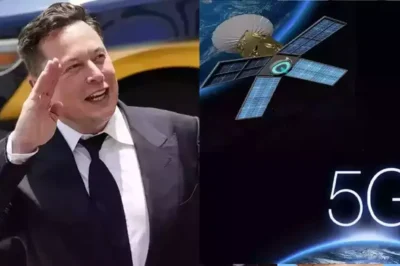
Elon Musk’s Starlink, a satellite-based internet service, has sparked competition in India’s broadband sector, raising concerns for major telecom giants like Jio and Airtel. Musk’s ambitious project uses low-Earth orbit (LEO) satellites to deliver high-speed internet directly to users’ devices, bypassing traditional telecom networks. This disruptive technology is a game-changer, offering connectivity in rural and remote regions, challenging Jio and Airtel’s market dominance, especially in areas where fiber infrastructure is costly and difficult to deploy.
Starlink’s Appeal: Bridging the Digital Divide
One of Starlink’s most significant advantages is its ability to provide high-speed internet in hard-to-reach rural and semi-urban areas. Traditional broadband in India has struggled with rural reach due to infrastructure limitations. Starlink, on the other hand, requires minimal ground infrastructure, making it more feasible for providing reliable internet access where conventional fiber or mobile towers are not financially viable.
Moreover, Starlink’s services don’t rely on ground-based networks, which means users in remote regions could experience connectivity that’s just as robust as in urban areas. This opens up new avenues for digital inclusion in education, healthcare, and e-commerce sectors in India’s rural heartlands.
The Competitive Impact on Jio and Airtel
Starlink’s entry into India poses a competitive threat to Jio and Airtel, as both companies have traditionally dominated the telecom space. These telecom operators invest heavily in fiber networks, cellular towers, and 5G infrastructure, which demand high capital and operating costs. Musk’s satellite technology could bypass much of this infrastructure, potentially making Starlink’s services cheaper to operate in specific contexts.
Jio and Airtel’s response includes aggressively expanding their 5G networks to provide high-speed services nationwide. However, Starlink’s LEO-based model could complement 5G, offering uninterrupted connectivity even in remote areas. This dual-system approach could put more pressure on Jio and Airtel to enhance rural network performance to retain market share.
Regulatory Hurdles and Starlink’s Strategy in India
Starlink’s journey in India isn’t without challenges. Regulatory approval is crucial for the deployment of satellite internet, as it requires spectrum licensing and alignment with India’s telecommunication policies. The Telecom Regulatory Authority of India (TRAI) and the Department of Telecommunications (DoT) have stringent policies regarding foreign operators. However, Starlink’s team is actively engaging with Indian authorities to ensure compliance and is reportedly in talks for required permissions.
To establish a solid foothold, Starlink may also explore collaborations with local providers or rural development initiatives. This approach could streamline regulatory processes and address service needs effectively. By combining Starlink’s technology with localized partnerships, Musk’s team could swiftly tap into India’s vast digital market.
Future Implications and the Path Forward
The introduction of satellite internet in India represents a technological shift with significant implications. For Jio and Airtel, it signals the need to diversify and enhance their service quality. They may also consider entering partnerships with satellite providers or investing in their own satellite technologies to compete. Starlink’s entry is ultimately a win for consumers, as increased competition promises better services, broader connectivity, and more affordable data options.
India’s internet landscape is on the brink of transformation, with Starlink offering an alternative approach to broadband. The market’s evolution will hinge on regulatory decisions, technological advancements, and the willingness of established players like Jio and Airtel to adapt to this satellite-powered future.







Leave a Reply